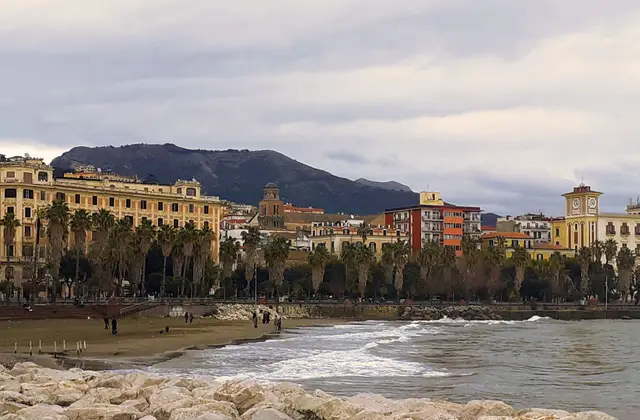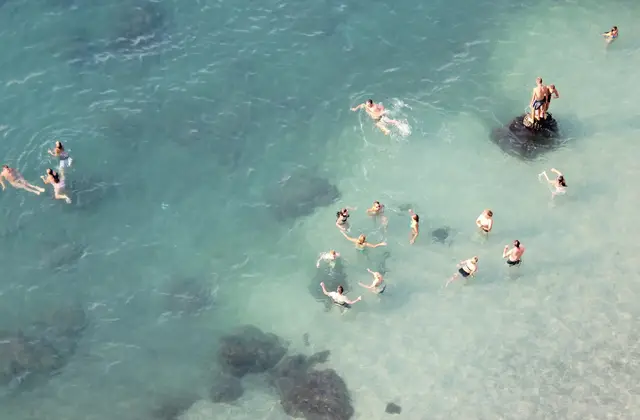
There are two ways to get from Amalfi to Capri by boat, and they cost sums that are not remotely comparable and produce completely different days. The Alicost ferry charges €23.00 each way and sets you down at Marina Grande in about fifty minutes; a private boat for the day starts at €715 and takes you where the ferry cannot go — under the Faraglioni, through the natural tunnel, into the caves on the southern side.
The choice comes down to one question: do you want to see the island, or do you want to see the island from the sea? They are different things, and on Capri they are more different than almost anywhere else. Here are the published fares, the real length of the usable window, the truth about the Blue Grotto, and the arithmetic that shows when a private boat stops being an indulgence.
The ferry: fares and timetables
The Amalfi–Capri route calls at Positano and is served by several companies. Published adult one-way fares:
| Operator | One way | Return | Children 4–12 |
|---|---|---|---|
| Alicost | €23.00 | €43.50 | €14.00 |
| Cooperativa Sant'Andrea | €27.50 | — | — |
| Lucibello | €28.50 | — | — |
| NLG | €30.00 | — | — |
Alicost is more than €4 cheaper than its nearest competitor, according to the fares the company publishes on its own timetables and fares page. The crossing takes about fifty minutes. Morning departures cluster between 08:25 and 10:30, afternoon returns between 16:25 and 18:50.
To these figures add the €5.00 per person landing tax from 1 April to 31 October (€2.50 for the rest of the year), which is not part of the ticket.
The Capri services run from April: Alicost from 1 April with a reduced weekday service until 31 May and daily sailings on some departures from 1 June to 30 September; NLG into the first days of November.
The usable window: how long you really have
With the first boat at 08:25 and the last return at 18:50 you have ten hours on paper. In practice, count it like this:
- 50 minutes across each way;
- 20–30 minutes between landing, the funicular ticket office and the queue;
- 15 minutes of margin to be on the pier before the return sailing.
That leaves between six and seven real hours on the island, which is enough for the Piazzetta, the Giardini di Augusto, lunch and Anacapri — or for the boat trip around the island with an attempt at the Blue Grotto. It is not enough to do both without rushing.
Take a later sailing, say the 10:30, and the window drops to four or five hours; at that point choose one thing and do it properly.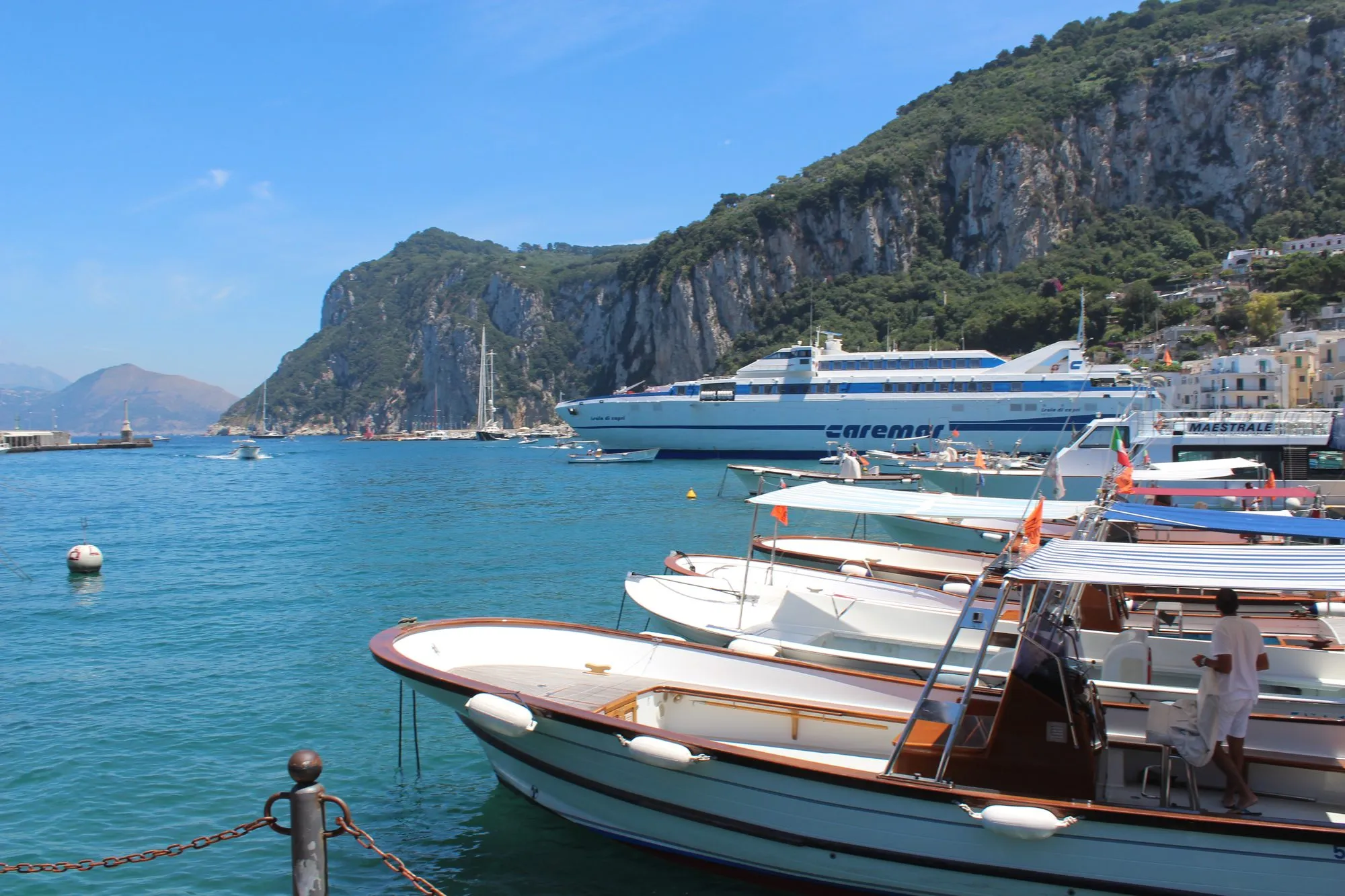 Every ferry docks at Marina Grande: from there the funicular to the Piazzetta costs €2.50, a taxi about €20.
The Blue Grotto: be honest with yourself before you go
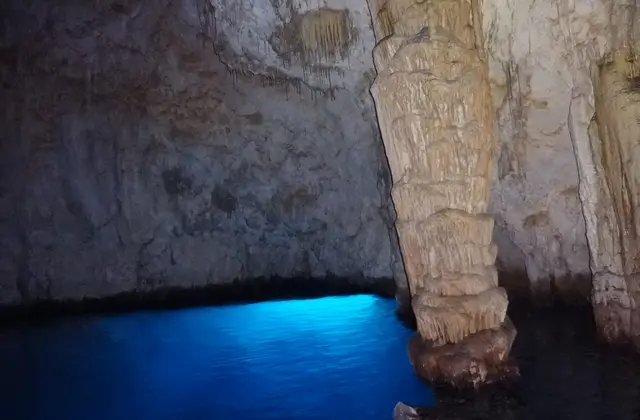
The Grotta Azzurra (Blue Grotto) opens 09:00–17:00, weather permitting, and costs about €18 per person at the floating ticket office, covering entry and the rowing boat. Under-sixes go free.
The catch is that "weather permitting". The grotto closes in a rough sea and in a westerly or libeccio (south-westerly) wind, and the decision is taken on the day: there is no way of knowing in advance. Anyone crossing from Amalfi with the grotto as their sole objective is buying a €23 lottery ticket, plus €5 to step ashore.
And when it is open, between 10:00 and 13:00 in summer you wait anywhere from half an hour to two hours. Swimming inside is prohibited during opening hours.
Many people searching for "the blue grotto on the Amalfi Coast" actually want a different cave altogether: the Grotta dello Smeraldo (Emerald Grotto) at Conca dei Marini, on the mainland coast itself, which costs €7 and opens 10:00–16:00. The differences between the two are set out in full on the page comparing the Blue Grotto and the Emerald Grotto.
The Faraglioni and the loop around the island
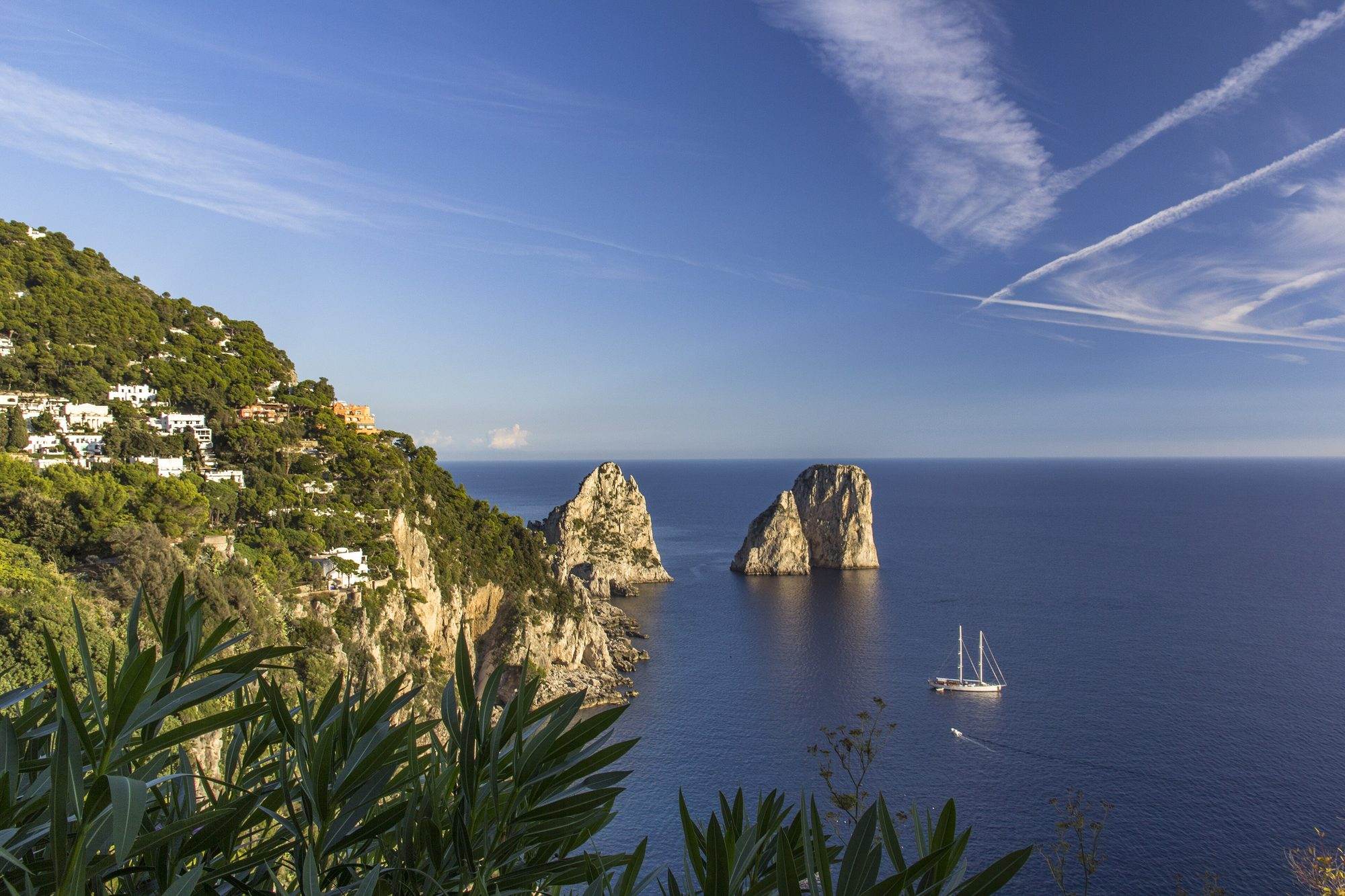
The three rocks have precise names and heights: Stella (or di Terra) at 111 m, joined to the island; di Mezzo at 81 m, pierced by a natural tunnel some sixty metres long that boats pass through; and Scopolo (or di Fuori) at 104–105 m, home to the blue lizard.
The run through the tunnel is the moment everybody photographs, and it is only possible in a small boat. Scheduled ferries do not go through: you need a small boat hired at Marina Grande (about €24 for the boat, with a tour of the island in a couple of hours, grotto ticket not included) or a private boat that has come over from Amalfi.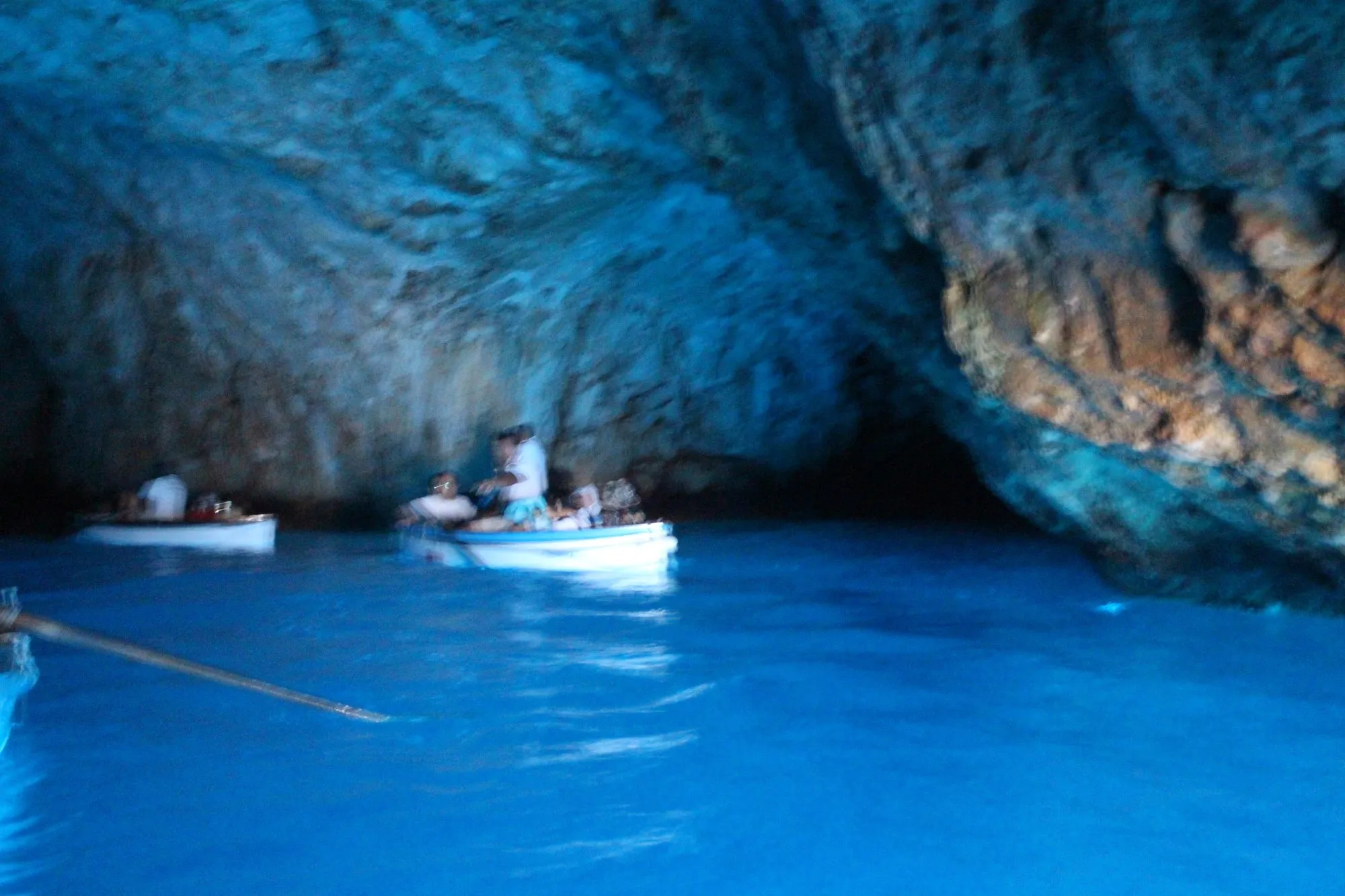 The Blue Grotto is entered only on the little rowing boats, lying flat: the opening is barely a metre high.
With a private boat: when it adds up
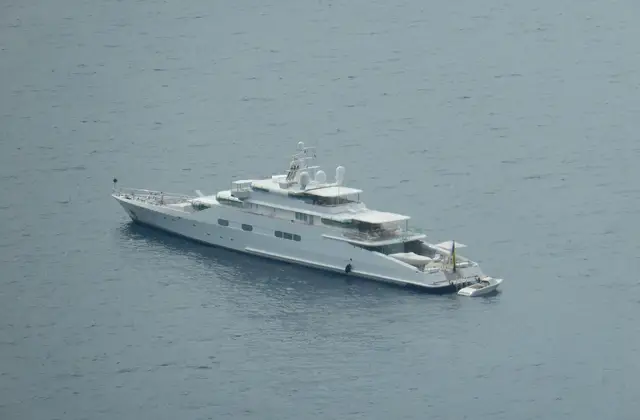
A six-hour private tour from Amalfi costs €715 per boat. Divided by eight passengers that is €89.38 each, against €23 for the ferry plus €5 to land. The difference is roughly €61 a head, and it buys:
- the full circuit of the island from the water, Faraglioni tunnel included;
- swim stops wherever you want them, for as long as you want them;
- no queue, no funicular, no fixed return time;
- the freedom to change the plan if the wind shifts.
It does not buy you a landing without the tax (the €5 still applies) or an open Blue Grotto. And in six hours from Amalfi the time for Capri is tight: the Amalfi–Capri leg takes about fifty minutes in a private boat too. The full per-person maths on every private format is on the private boat tours page, while for larger crewed boats the reference page is yacht charter.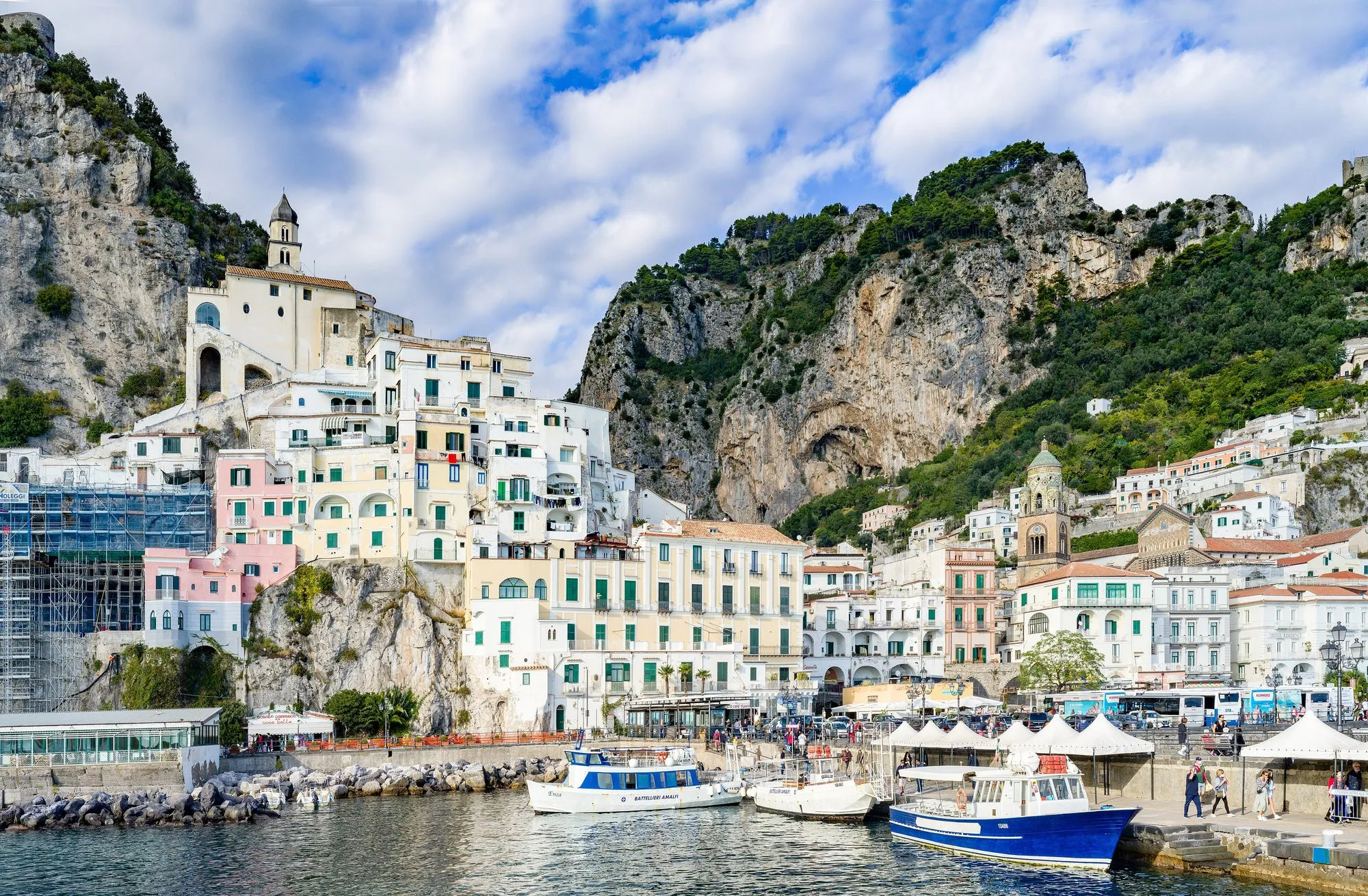 The Molo Pennello at Amalfi: ticket offices on the quay, cards accepted, five minutes on foot from the cathedral.
Alternatives from other ports
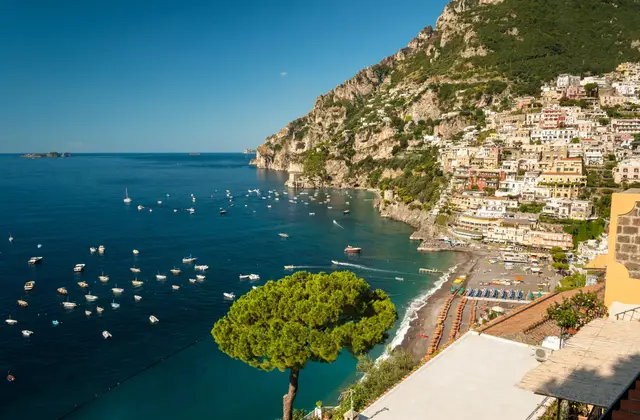
From Positano. The crossing is shorter — about 12 nautical miles, 40–50 minutes — and Alicost charges the same €23.00 (€43.50 return), with a first sailing at 08:50 and the last return around 18:15. All the detail is in boat tours from Positano.
From Salerno. Alicost charges €25.50 one way and €49.00 return, departing from the Molo Manfredi at 07:50 or the Molo Masuccio at 08:00, 12:00 and 16:10. This is the option for anyone arriving by train: the logistics are on the boat tours from Salerno page.
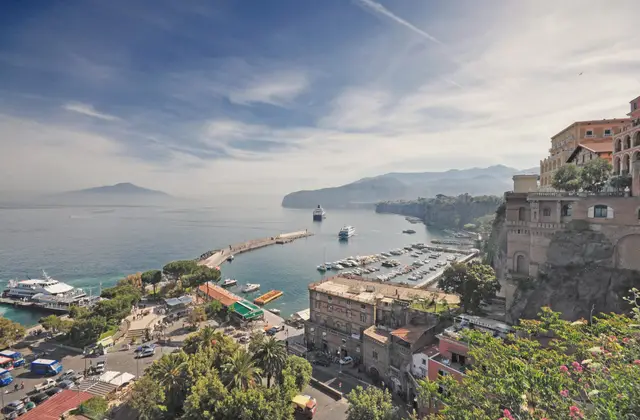
From Sorrento. The shortest route of all: roughly 9 nautical miles, 20–25 minutes, fares between €21.40 and €28.00 depending on the operator, first sailings from 07:15. If you have only one day and Capri is the priority, leaving from Sorrento is the most efficient choice: see the boat tours from Sorrento page.
When to go
May, June and September are the right months. Sea at 19.0 °C in May, 23.1 °C in June and 24.9 °C in September according to ten-year averages for Amalfi. The queues at the Blue Grotto are shorter, the ferries do not fill, and the light on the Faraglioni in mid-morning is still good.
July and August are the worst period for logistics and the best for the water (26.0–26.7 °C). If you come in these months, take the first sailing: at 08:25 the Piazzetta is empty and the grotto queue has not yet started.
April and October have a reduced ferry service but an almost deserted island. Check the timetable the day before, because weekday frequencies are much lower.
How to plan the perfect day
- Buy the ticket the day before on the company's website, outbound and return together.
- Take the first sailing, around 08:25 from the Molo Pennello in Amalfi, five minutes on foot from the cathedral steps.
- The moment you land, ask at the grotto ticket desk whether it is open. If it is, go straight there: at 09:30 the queue is still short.
- If it is closed, take the funicular (€2.50) and do the Piazzetta, the Giardini di Augusto, Via Krupp and lunch, then the small boat tour of the island in the afternoon.
- Be back at the pier fifteen minutes early for the last usable sailing.
If you would rather not land at all and would prefer to spend the day in the water, the boat tour from Amalfi with caves and drinks at €86 per person stays on the mainland coast and takes you to Positano, the fjord and the caves without any of the island's complications. Anyone whose priority is swimming should read the guide to snorkelling on the coast.
Amalfi to Capri by boat works beautifully as long as you accept its constraints: a six- or seven-hour window, a grotto that opens when it feels like it, and a forced choice between the island on foot and the island from the sea. Once you have decided which of the two you want, the rest is logistics. Compare timetables and availability for boat trips from Amalfi and book with free cancellation.