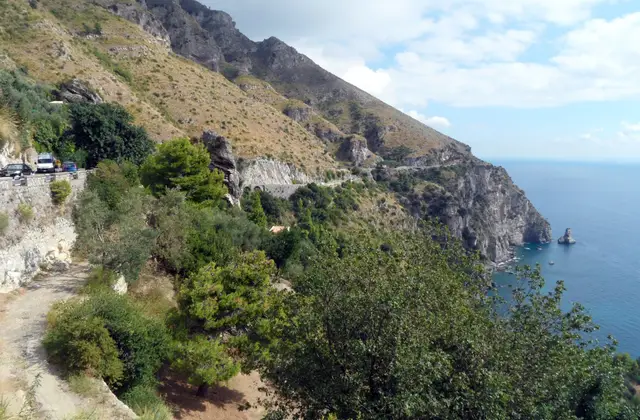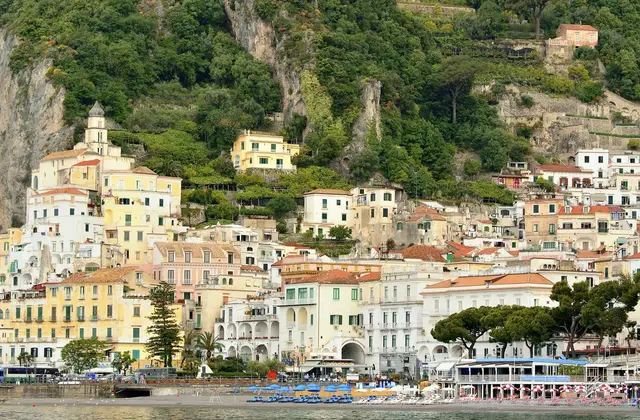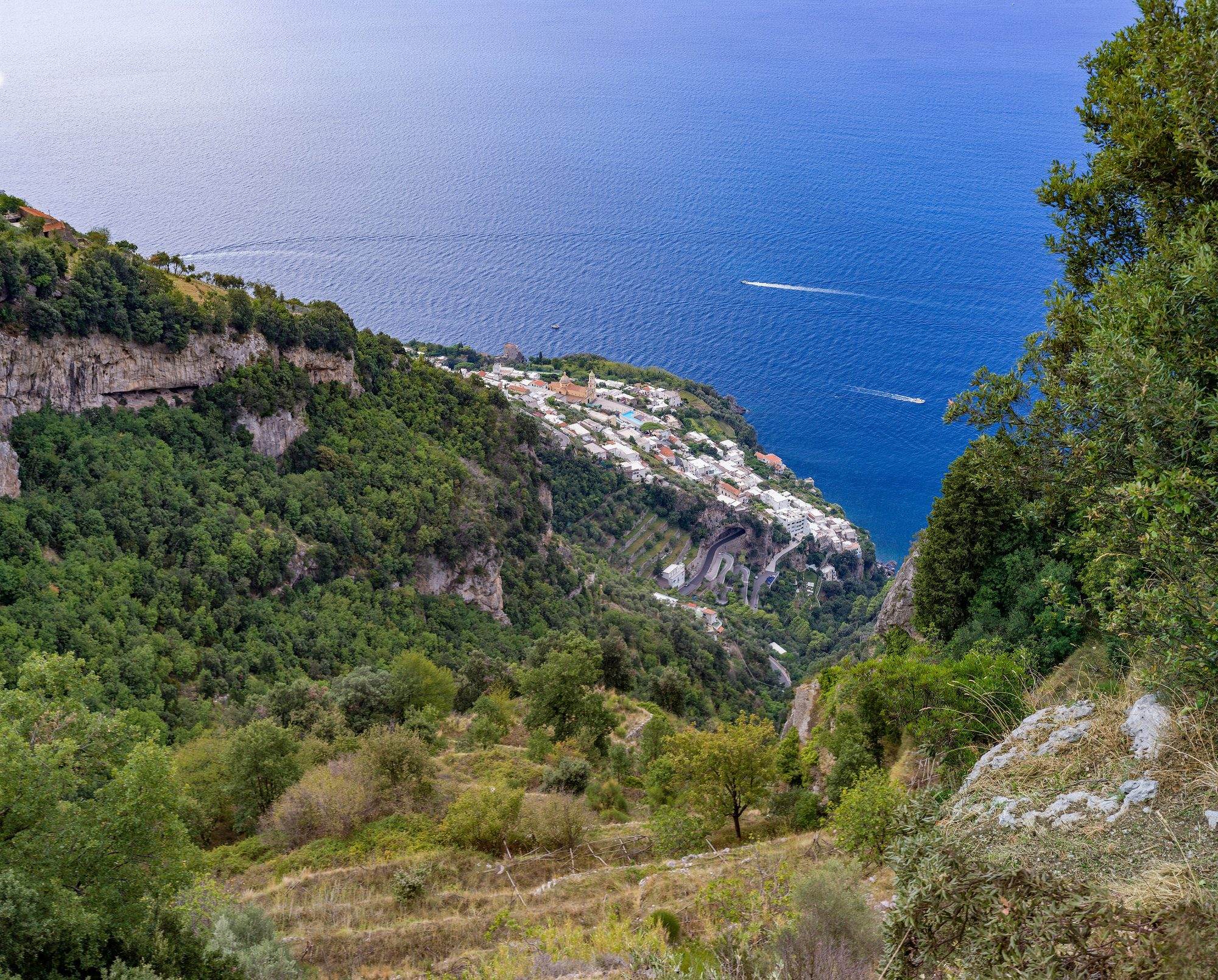
The Sentiero degli Dei (the Path of the Gods) is the reason people walk on the Amalfi Coast rather than only sail it: four and a half kilometres of mountainside traverse six hundred metres above the sea, with Li Galli and Capri in front of you the whole way. It is trail CAI 27 in the Parco Regionale dei Monti Lattari, and you will still see the older number 02 painted on rocks.
This guide gives the real figures for the route, explains how to reach the start on the SITA bus without a car, adds the two other walks worth your time, and shows how to end the day on the water instead of stuck in traffic on the coast road.
The Path of the Gods in numbers
| Item | Figure |
|---|---|
| Route | Bomerano (Agerola, about 630 m) to Nocelle (Positano) |
| Trail number | CAI 27 (older signage 02) |
| Bomerano–Nocelle distance | about 4.5 km |
| Nocelle–Positano stairway | about 1.7 km and roughly 1,700 steps |
| Total distance usually quoted | about 7.8 km |
| Time | 3–4 hours |
| Total descent | about 638 m (roughly 220 m plus roughly 420 m) |
| Grade | E (hiking), with exposed sections |
| Cost | free |
The right direction is Bomerano to Nocelle. That way the path loses height gradually and drops you into Positano, where there are ferries, beaches and restaurants. The other way round means starting the day with 1,700 steps uphill.
Getting to the start without a car
The SITA bus from Amalfi to Agerola takes about 40 minutes and stops at Bomerano – Piazza Paolo Capasso. From there the signage for the trail is obvious. Tickets are never sold on board: you need a bar or tobacconist with the SITA sign, or the Unico Campania app. The COSTIERASITA day pass costs €10 (€12 including the Positano town buses) and pays for itself in two journeys.
Almost nobody walking this route hires a car for it, and there is no reason to: there is no way to retrieve a vehicle left at Bomerano once you have walked down to Positano. If you are coming from Sorrento or Salerno, every combination of train, ferry and bus is set out in getting to the Amalfi Coast.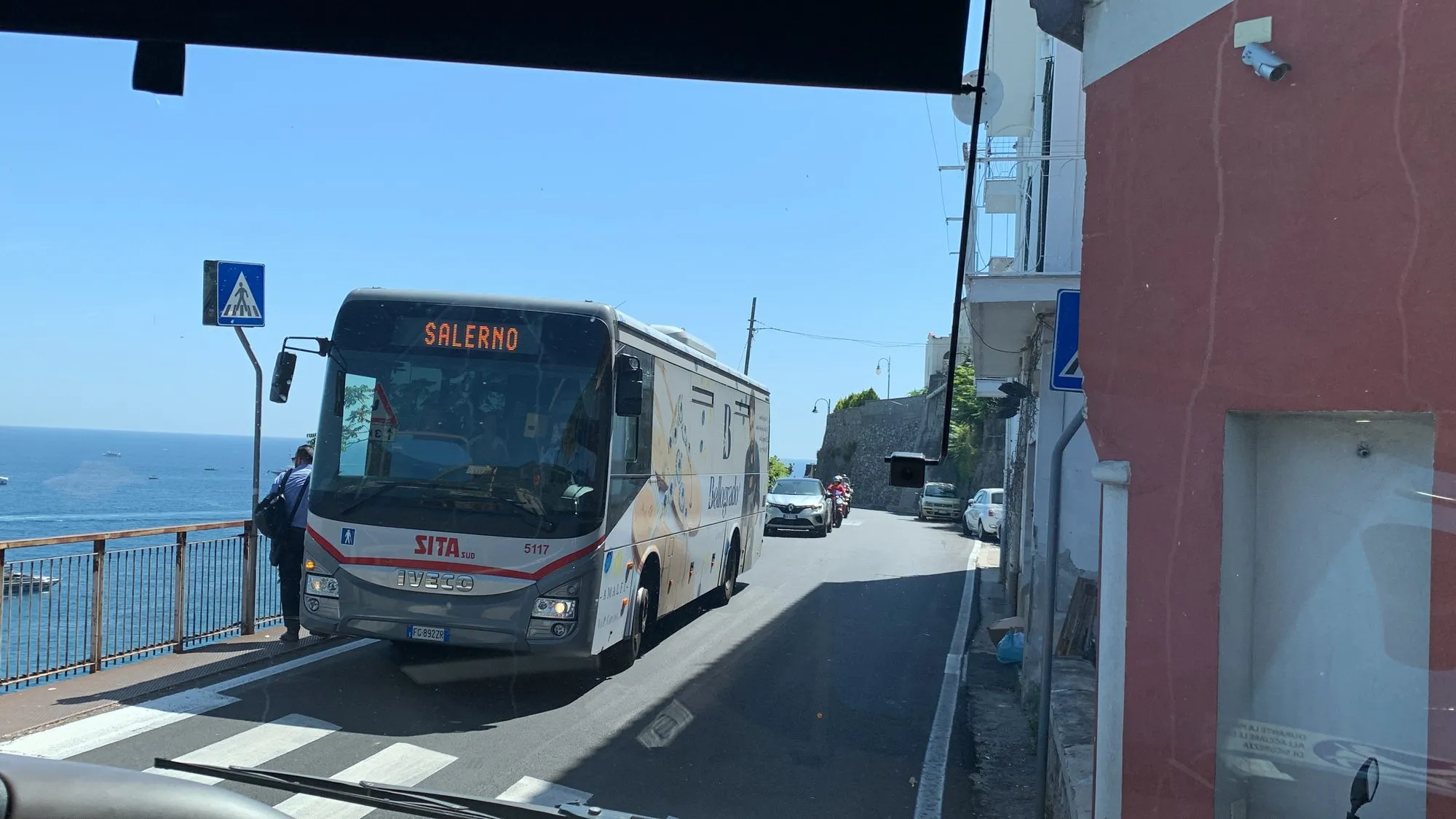 The SITA bus to Agerola: the only public transport that reaches the head of the trail.
What you see along the way
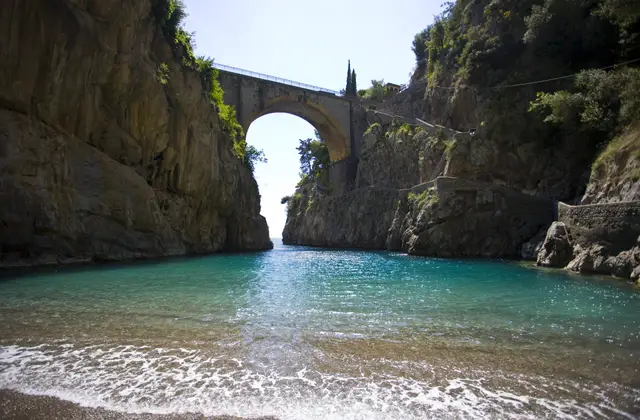
The route runs above Praiano and Vettica, cuts through abandoned terraces and old stone shepherds' shelters, and for nearly its whole length keeps the view open across Li Galli, the islets off Positano and, on clear days, Capri. From up here you can also pick out the cleft of the Fiordo di Furore, which from the trail looks like a dark slot in the rock.
The exposed sections are few but genuine: narrow passages with no railing and a long drop to the sea. No equipment required, just a steady head. With small children, or anyone who dislikes heights, it is better to stop at Nocelle and take the local bus down.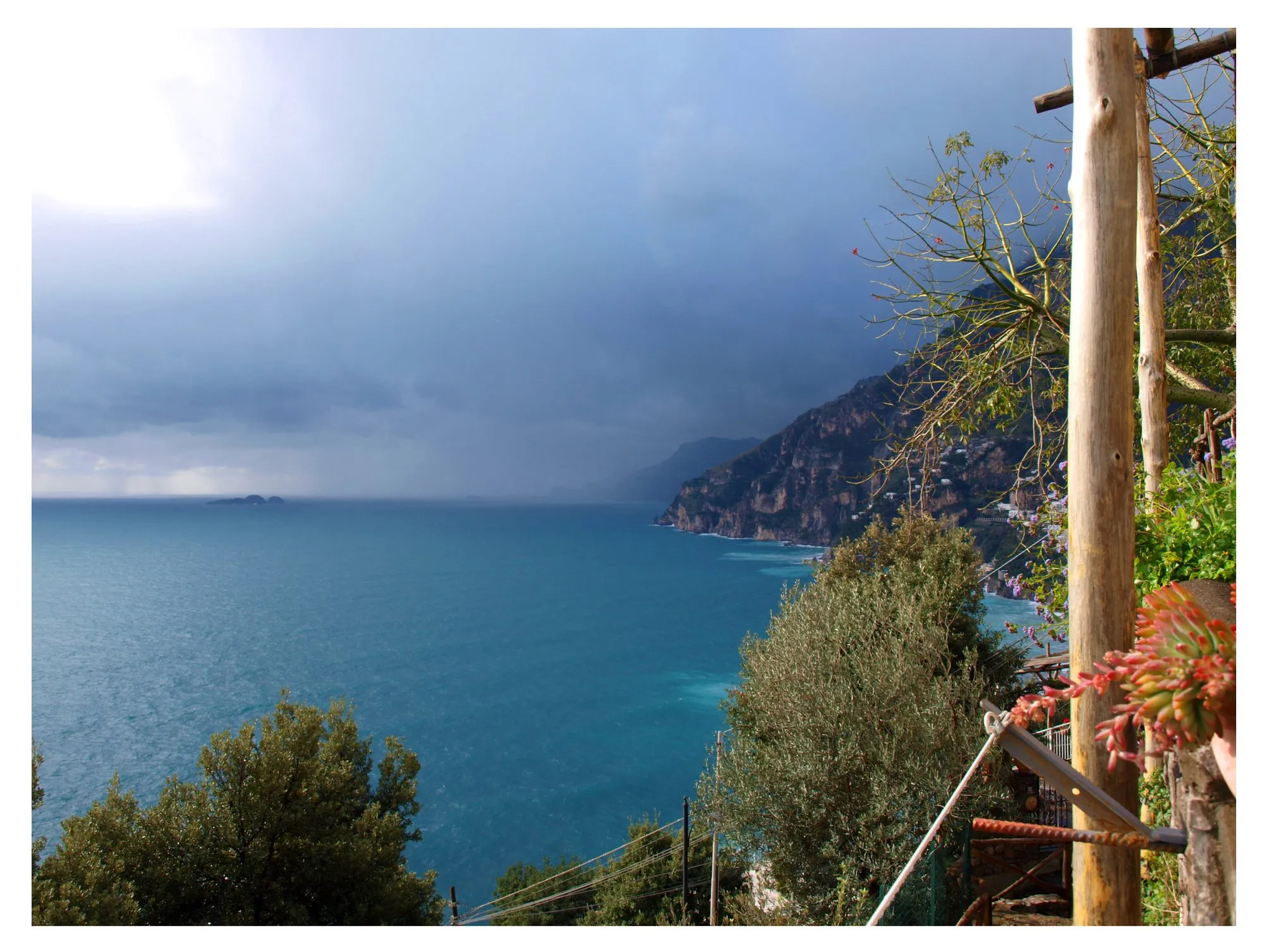 The stairway from Nocelle drops towards Arienzo: roughly 1,700 steps and 420 metres of descent.
The descent into Positano
From Nocelle it is 1.7 km of steps down to the Arienzo area, then road into the centre. This is the part that catches everyone out: the climbing takes your breath, but the descent is what hurts the knees. To avoid it, take the local bus from Nocelle down into Positano.
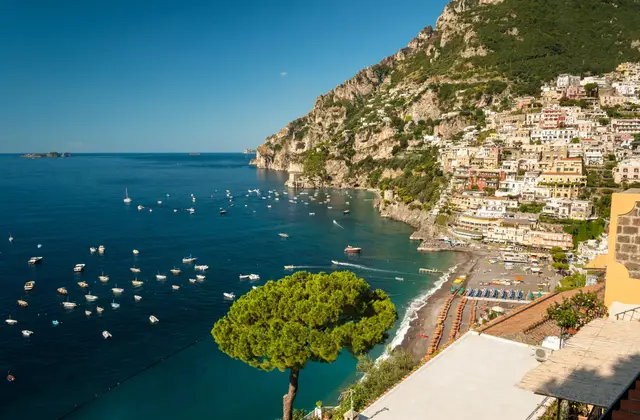
Once you are at the bottom, the Spiaggia Grande jetty is where the day changes gear: ferries leave from there for Amalfi (€10, about 25 minutes, on Travelmar's published fares) along with the boat trips. All the jetty logistics are on the Positano by boat page.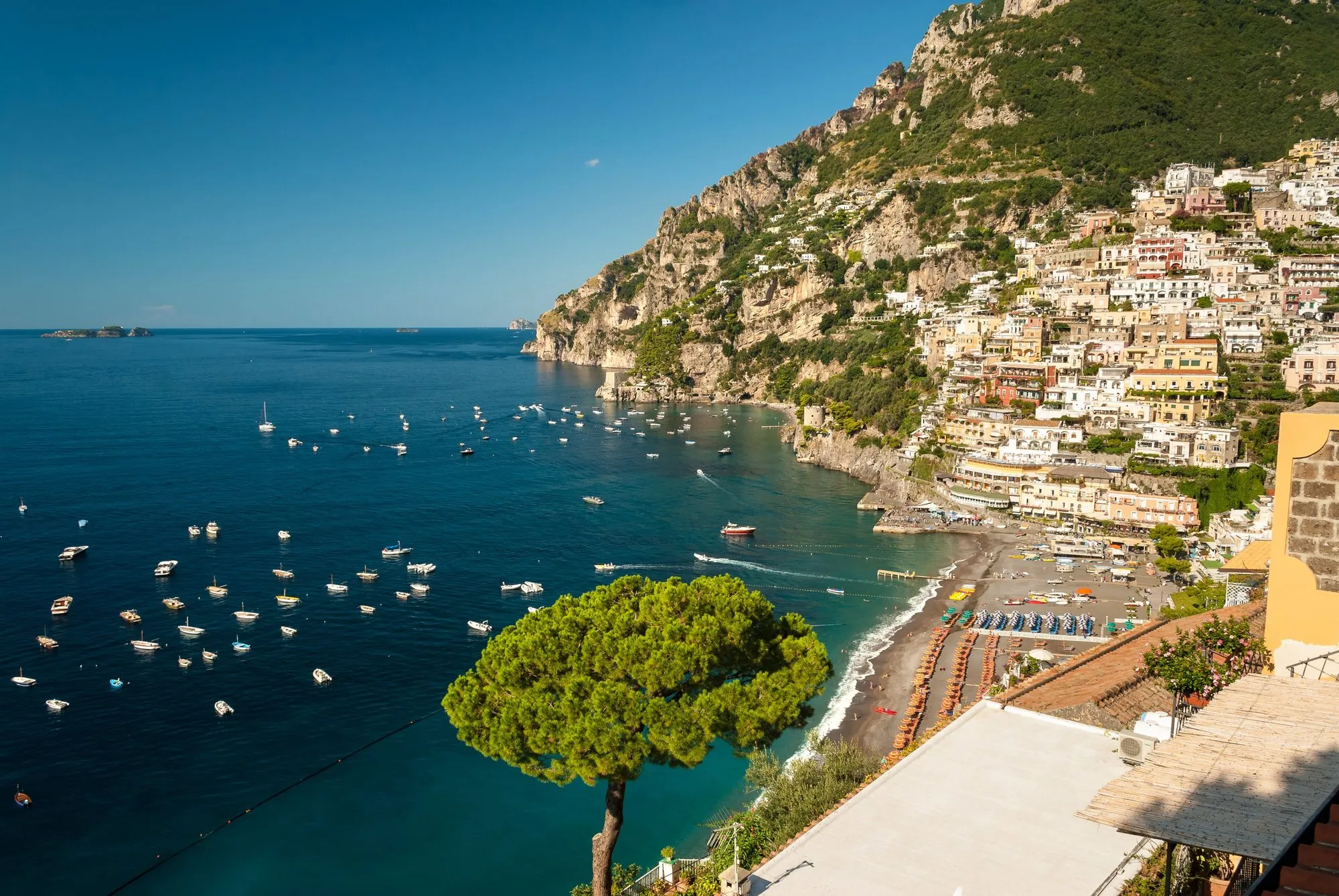 End of the trail: ferries and boat tours leave from Spiaggia Grande.
Sentiero dei Limoni: Maiori to Minori
The easy alternative, and for many people the more interesting one culturally. It starts at the Collegiata di Santa Maria a Mare in Maiori, crosses the hamlet of Torre and the Mortella viewpoint, and drops into Minori through the lemon terraces.
- Distance: about 5 km with roughly 290 metres of height gain in the basic version. Extended to Ravello it becomes about 9 km, 5 hours and 410 metres.
- Maiori to Minori: an hour and a half to two hours.
- Cost: free.
You finish in Minori, home of the delizia al limone (lemon delight): the story of the pudding and of the wineries is on the food and wine page. The Travelmar ferry between Maiori and Minori costs €3, so you can walk one way and come back by sea.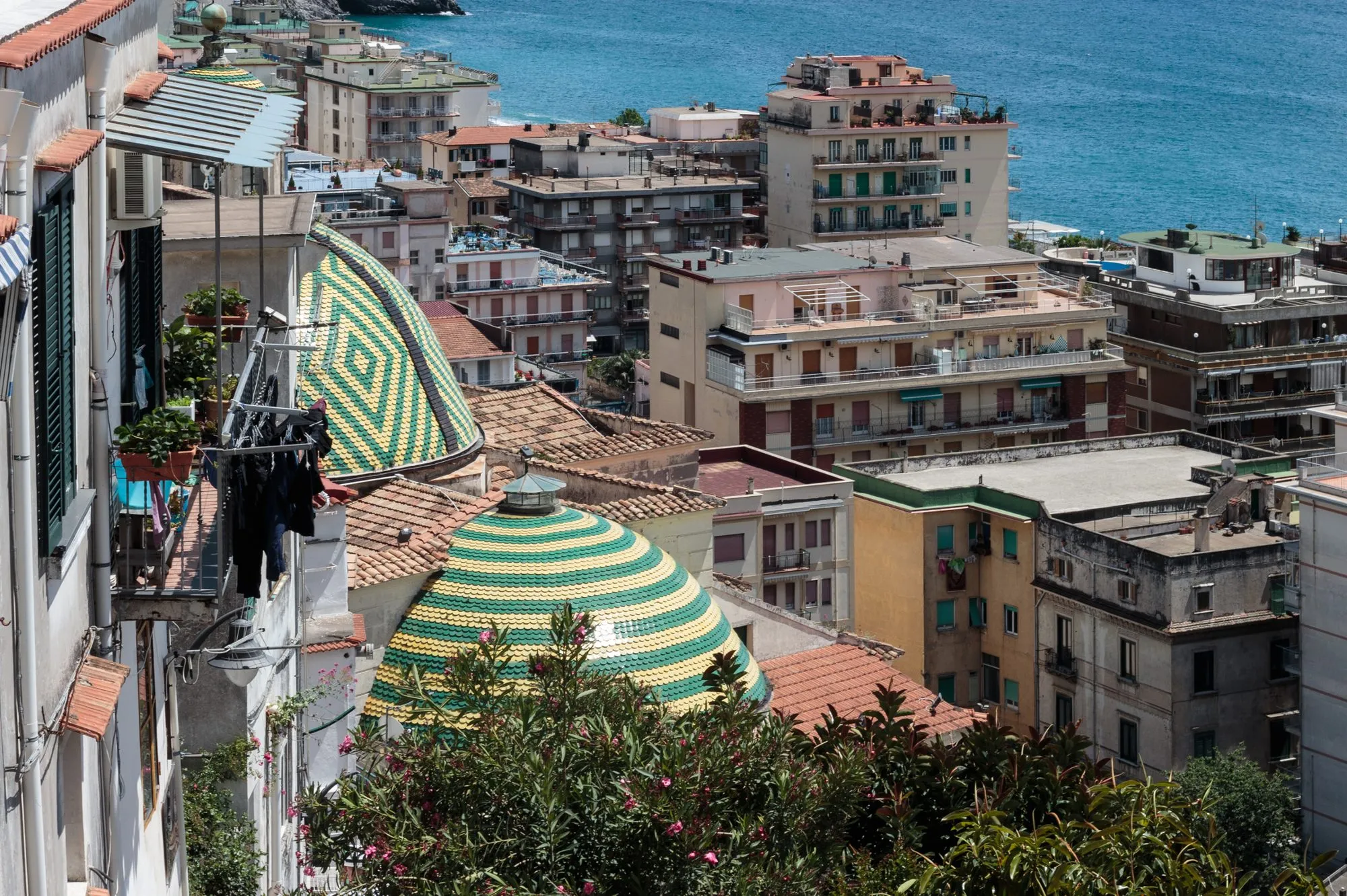 The Sentiero dei Limoni runs through the terraces that produce the Limone Costa d'Amalfi IGP.
Valle delle Ferriere: the one you pay for
The state nature reserve above Amalfi can only be visited with a guide: €5 per person, groups of 20 every 30 minutes, a maximum stay of 30 minutes inside the reserve. Hours are 10:00–15:00 on weekdays and 09:30–16:00 at weekends. Free for under-12s, over-65s and visitors with disabilities.
The classic approach is trail 323 from Piazza San Giovanni at Pontone (Scala) down to Amalfi through the valley: about three hours. It is the only damp, shaded environment on the coast, with relict ferns and the ruins of the old ironworks and paper mills that explain Amalfi's Museo della Carta (Paper Museum).
Walk in the morning, sail in the afternoon
This is the combination that makes best use of the day. In the morning the sea is flat and the light on the path is good; by early afternoon the thermal breeze picks up and the coast is far more pleasant seen from the water than endured from a bus.
Two pairings that work:
- Path of the Gods plus ferry. Reach Positano around 12:30, have lunch, then a boat tour with snorkelling and drinks at €95 per person, or the ferry to Amalfi at €10.
- Valle delle Ferriere plus a short boat trip. Back in Amalfi by mid-afternoon and out on the two-hour trip to the Fiordo di Furore at €36 per person, with a swim stop: the sea is 24.9 °C in September.
Prices are those shown on GetYourGuide and checked. A comparison of every format of boat trip is in the guide to Amalfi Coast tours, while the wider picture of the region is on the Amalfi Coast page.
The other routes worth knowing about
Beyond the big three, the Monti Lattari network has useful alternatives for when the Path of the Gods is crowded or the weather looks uncertain.
- Torre dello Ziro, from Pontone or Atrani. Under an hour of climbing to the watchtower on the spur above Amalfi and Atrani. The shortest walk with the best effort-to-view ratio anywhere on the coast.
- Bomerano down to the Fiordo di Furore. A long, steep descent straight to the inlet, an alternative to the stairway from the SS163 bridge.
- Maiori to Ravello. The extension of the Lemon Path: about 9 km, 5 hours and 410 metres of ascent, finishing between Villa Rufolo and Villa Cimbrone.
- The Nocelle and Montepertuso loop. Handy if you are staying in Positano: ride the local bus up and walk back down, without taking on the whole trail.
What to bring
| Item | Why |
|---|---|
| Shoes with a lugged sole | the surface is polished limestone, slippery even when dry |
| At least 1.5 litres of water each | there are no fountains or bars on the main route |
| Hat and sun cream | after 11:00 there is almost no shade |
| Torch or head torch | useful in autumn, when the light goes early on the descent |
| Cash | SITA buses and the small bars in Bomerano and Nocelle do not always take cards |
| Poles | optional on the ups, very welcome on the final 1,700 steps |
Leave the big rucksack at the hotel: this is a day walk, and on those last steps every kilo counts double.
Mistakes to avoid
- Starting in Positano and heading for Bomerano: 1,700 steps uphill at the start of the day.
- Counting on a bar somewhere along the route. There isn't one.
- Underestimating the SITA timetable: services are not frequent and the last one is around 22:00.
- Booking an afternoon boat trip too early. If the walk runs slow, you miss the departure.
- Walking the trail in August at midday.
Everything else worth seeing among the villages and villas is collected in things to do on the coast, and day-by-day itineraries are in the guide to planning your trip.
The Path of the Gods is still the most rewarding walk on the Amalfi Coast for effort against view, but it is at its best as the first half of a day that ends in the water: fix the walk for the morning and book the afternoon boat trip with free cancellation, so that if the weather turns you only have to move the sea half of the plan.