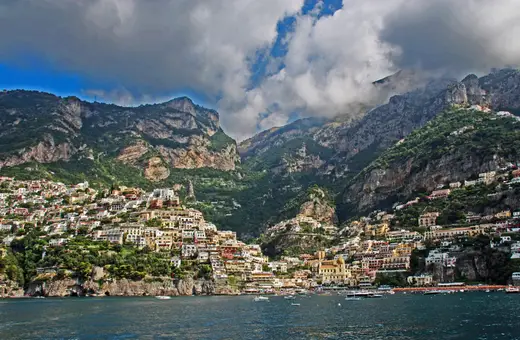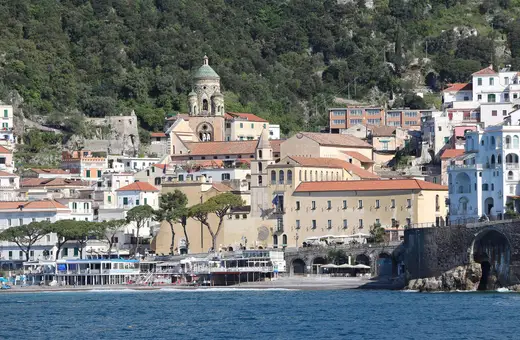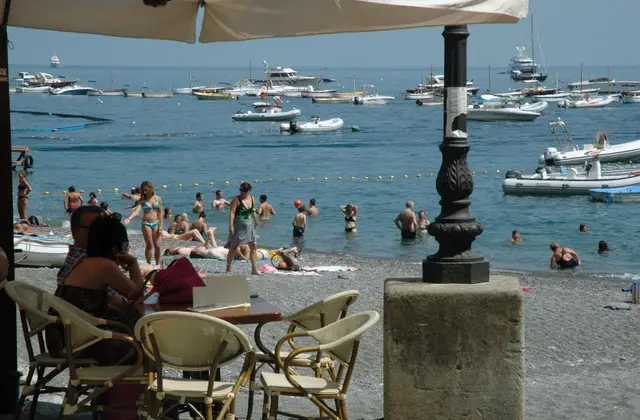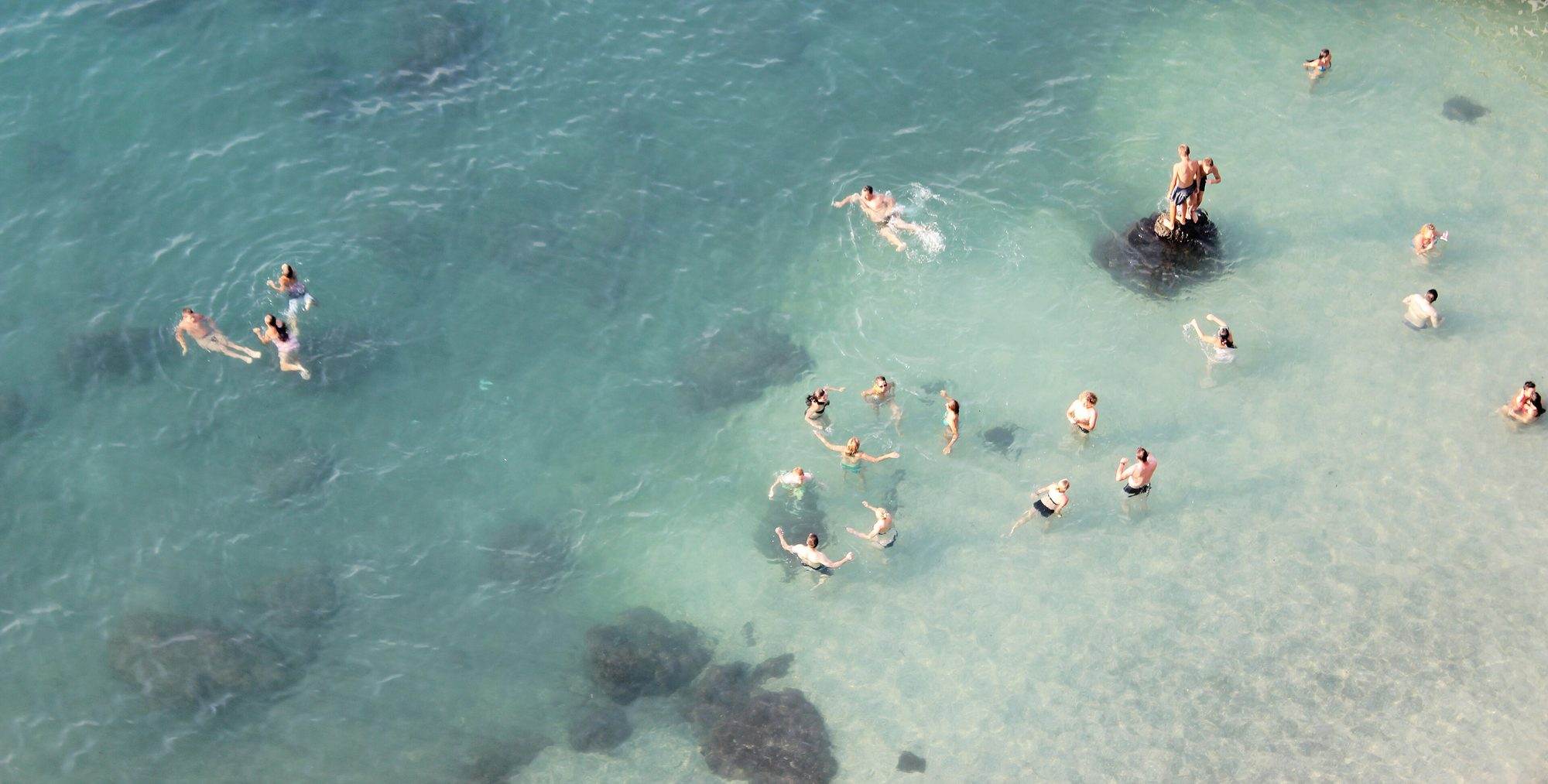
Snorkelling on the Amalfi Coast is a specific thing: limestone dropping away steeply, meadows of Posidonia seagrass, flooded caves and water that touches 23 °C in June. It is not a tropical documentary, and anyone who sells it to you that way is selling you something. It is, however, one of the few stretches of Italian coast where you go from the pier to a seabed worth looking at in ten minutes of sailing.
The boat is what makes the difference. From land you can reach Marina di Praia, the Fiordo di Furore and not a great deal else; the rest of the coast is vertical rock with no access. That is why almost every boat tour includes one or two swim stops, and the cheapest way into the water is the two-hour tour from Amalfi towards the Fiordo di Furore at €36 per person according to GetYourGuide, price verified.
What you actually see underwater
The typical seabed is rock with Posidonia from three or four metres down. The marine life is standard inshore Mediterranean: shoals of salema, black damselfish hovering over the rock, saddled bream, the odd rainbow wrasse, octopus tucked into crevices and starfish on the sand of the smaller inlets. With luck, a shoal of small white bream near the shallows.
Visibility on a calm morning is good, roughly 10–15 metres, and collapses after a south-westerly blow or heavy rain, when the ravines flush sediment into the sea.
The five spots worth a mask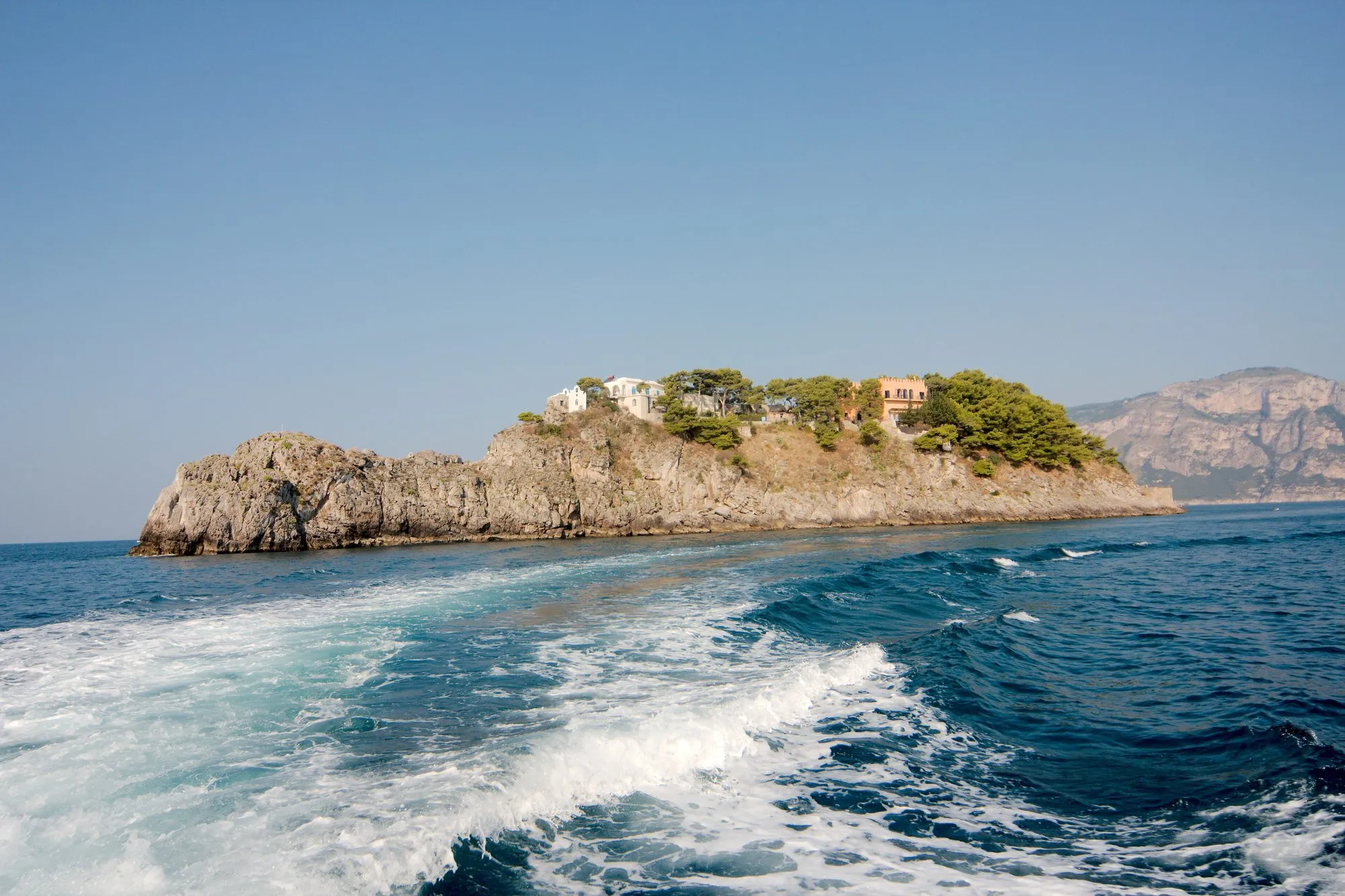
Li Galli: interesting seabed, zone B of the marine protected area, anchoring prohibited.
| Spot | Where | What to expect | Getting there |
|---|---|---|---|
| Li Galli | 3 km off Positano | Rock and seagrass, very clear water, possible current in the channel | By boat only, drifting stop |
| Capo di Conca | Conca dei Marini | Exposed rocky headland, seabed dropping sharply, Saracen tower above | Boat; steep steps from land |
| Marina di Praia | Praiano | The most sheltered cove on the coast, good even in a westerly swell | On foot from the SS163, or by boat |
| Faraglioni | Capri | The most photographed stretch: Stella 111 m, di Mezzo 81 m with a tunnel of about 60 m, Scopolo 104 m | Boat from Amalfi, Positano or Sorrento |
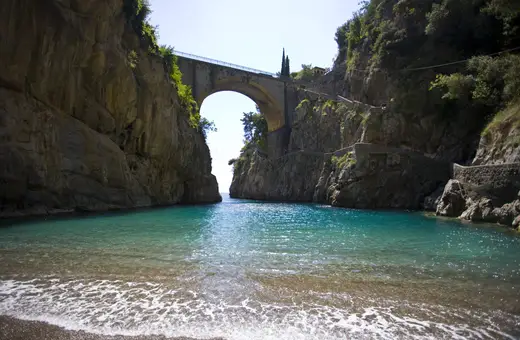
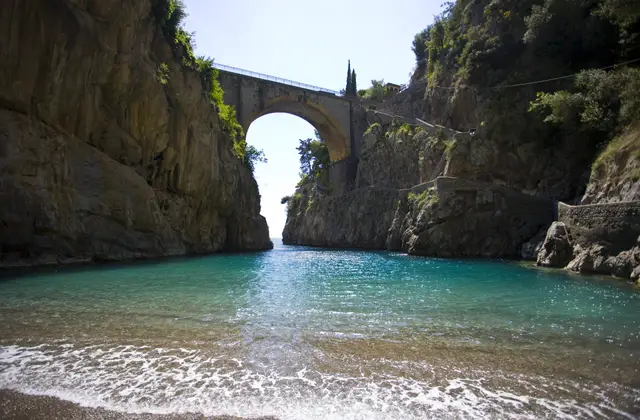
| Fiordo di Furore | Furore, km 23 of the SS163 | Narrow, shaded inlet, cold water, smooth rock | On foot down the steps, or by boat |
The Faraglioni are reached on the longer trips towards Capri: the Capri by boat from Amalfi page covers timetables, ferries and the landing tax. The fjord has a page of its own, the Fiordo di Furore, with the logistics from the land side.
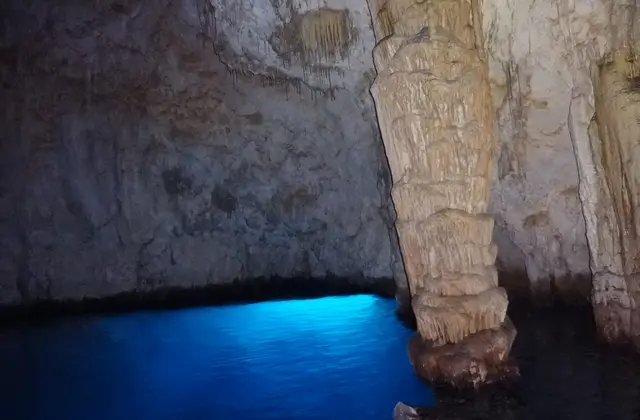
One clarification that saves disappointment: the caves are not snorkelling spots. At the Blue Grotto on Capri swimming is prohibited during opening hours, and at the Grotta dello Smeraldo at Conca dei Marini you go in only aboard the rowing boat. The two are told apart on the Blue Grotto and Emerald Grotto page; for the water, stay outside, where the seabed is more interesting anyway.
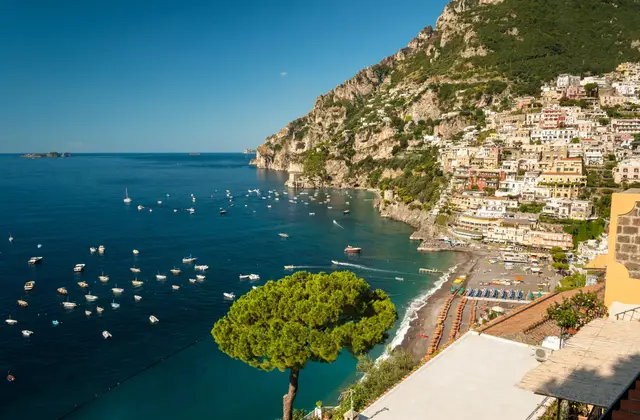
Leaving from Positano has one advantage: Li Galli is barely half an hour's sailing away, and the three islands — Gallo Lungo, La Rotonda and Dei Briganti — form a small private archipelago. You can swim around them, but the anchor stays up. Piers, beaches and local shuttle boats are covered in boat tours from Positano.
Sea temperature, month by month
Ten-year averages recorded at Amalfi. Below 19 °C you want at least a shorty wetsuit to stay in for more than twenty minutes.
| Month | °C | Month | °C |
|---|---|---|---|
| April | 15.9 | August | 26.7 |
| May | 19.0 | September | 24.9 |
| June | 23.1 | October | 22.2 |
| July | 26.0 | November | 19.8 |
October catches almost everyone out: 22.2 °C on average, empty beaches and low-season prices. The trade-off is that many group tours shut up shop at the end of October and the ferries cut their sailings.
Which outing to choose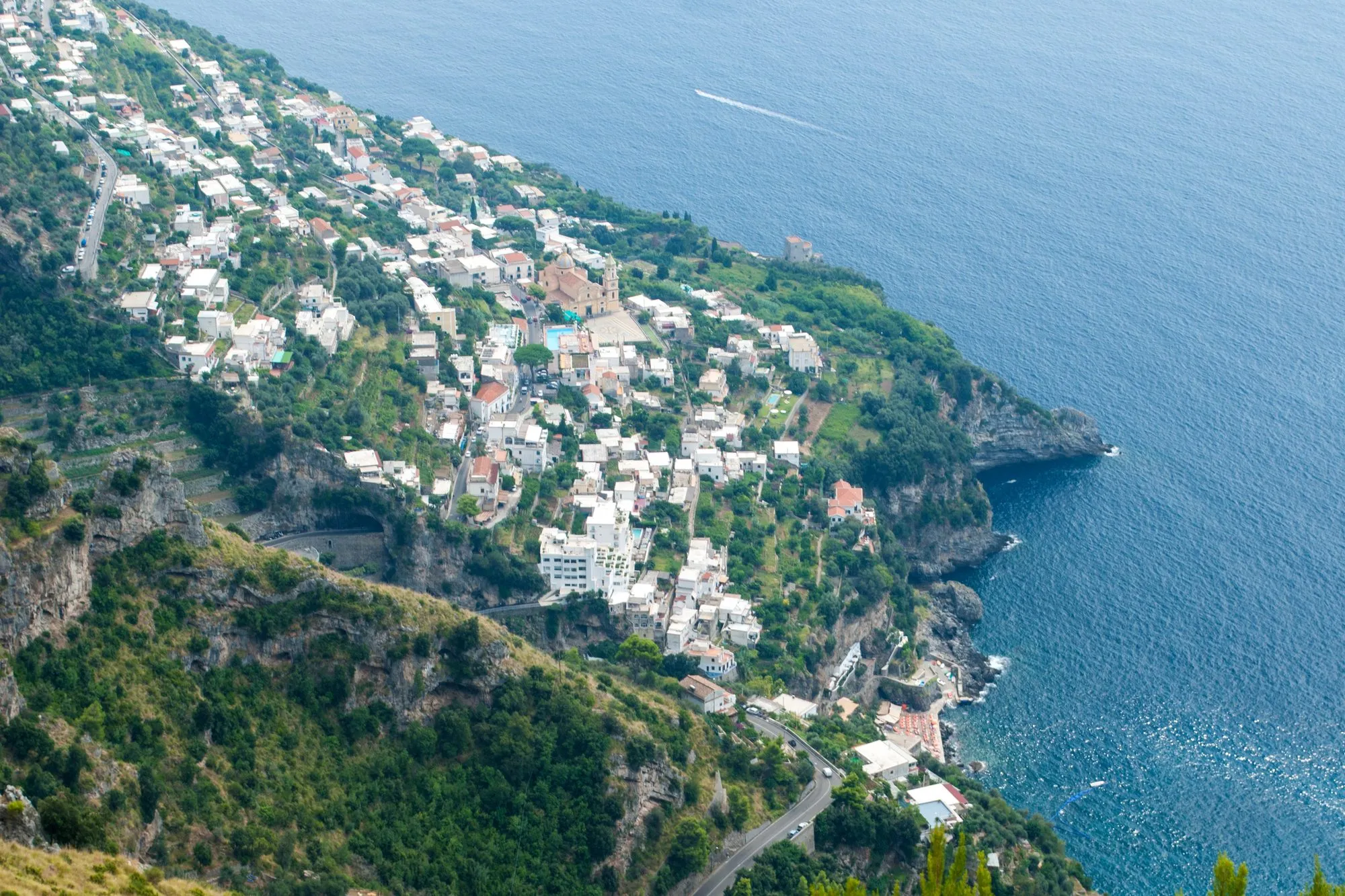
Marina di Praia: the most sheltered cove on the coast, and reachable on foot from the main road.
| Format | Who it suits | Price | Duration | Swim stops |
|---|---|---|---|---|
| 2 h tour from Amalfi | Half a morning, just a taste | €36 per person | 2 h | 1 |
| Caves tour from Amalfi | Caves and a swim on the same day | €86 per person | 4–8 h | 2 |
| Snorkelling tour from Positano | A full day with drinks on board | €95 per person | 4–8 h | 2 |
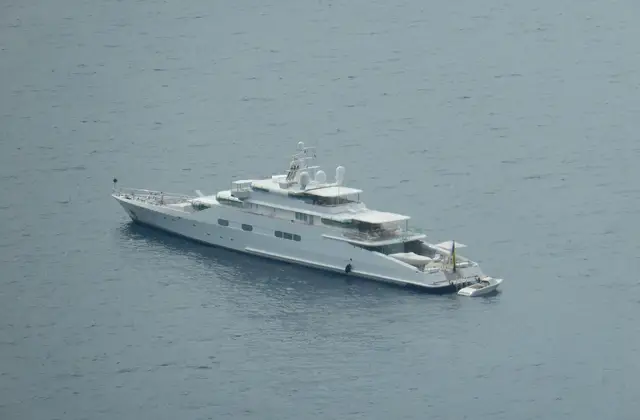
| Private boat from Amalfi | Groups of 4 up, deciding your own stops | from €715 per boat | 6 h | your call |
| Licence-free rental | People who can handle a boat and want full autonomy | from €350 half day | 4 h | unlimited |
Tour prices seen on GetYourGuide; the rental price is the one Lucibello publishes. On a €715 private boat the sum comes to about €179 each for four and about €119 for six: parity with the €95 group tour arrives at around eight people. The full arithmetic is on the private boat tours page, while anyone who wants to drive themselves will find the rules under boat rental.
If budget is the overriding concern, the caves and snorkelling tour from Amalfi remains the group outing with the best ratio of time in the water to money spent.
Getting to the departure pier
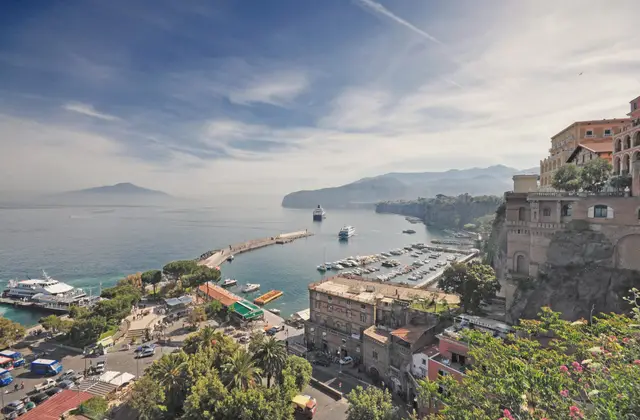
- Amalfi, Molo Pennello (Via Lungomare dei Cavalieri 74): five minutes on foot from the cathedral steps, ticket offices on the quay, cards accepted. The shuttle boats to the Emerald Grotto leave from here too.
- Positano, Spiaggia Grande pier: the only jetty, in front of the main beach, reached on foot down the stepped lanes off Viale Pasitea. Hard work with luggage; without it, ten minutes downhill.
- Marina di Praia (Praiano): an eighty-metre cove below the Torre a Mare, the embarkation point for departures from Praiano, with the Castellano car park at around €3 an hour.
If you are coming for the day, bus, train and ferry times are in the guide to getting to the Amalfi Coast.
The rules in the water, which are genuinely enforced here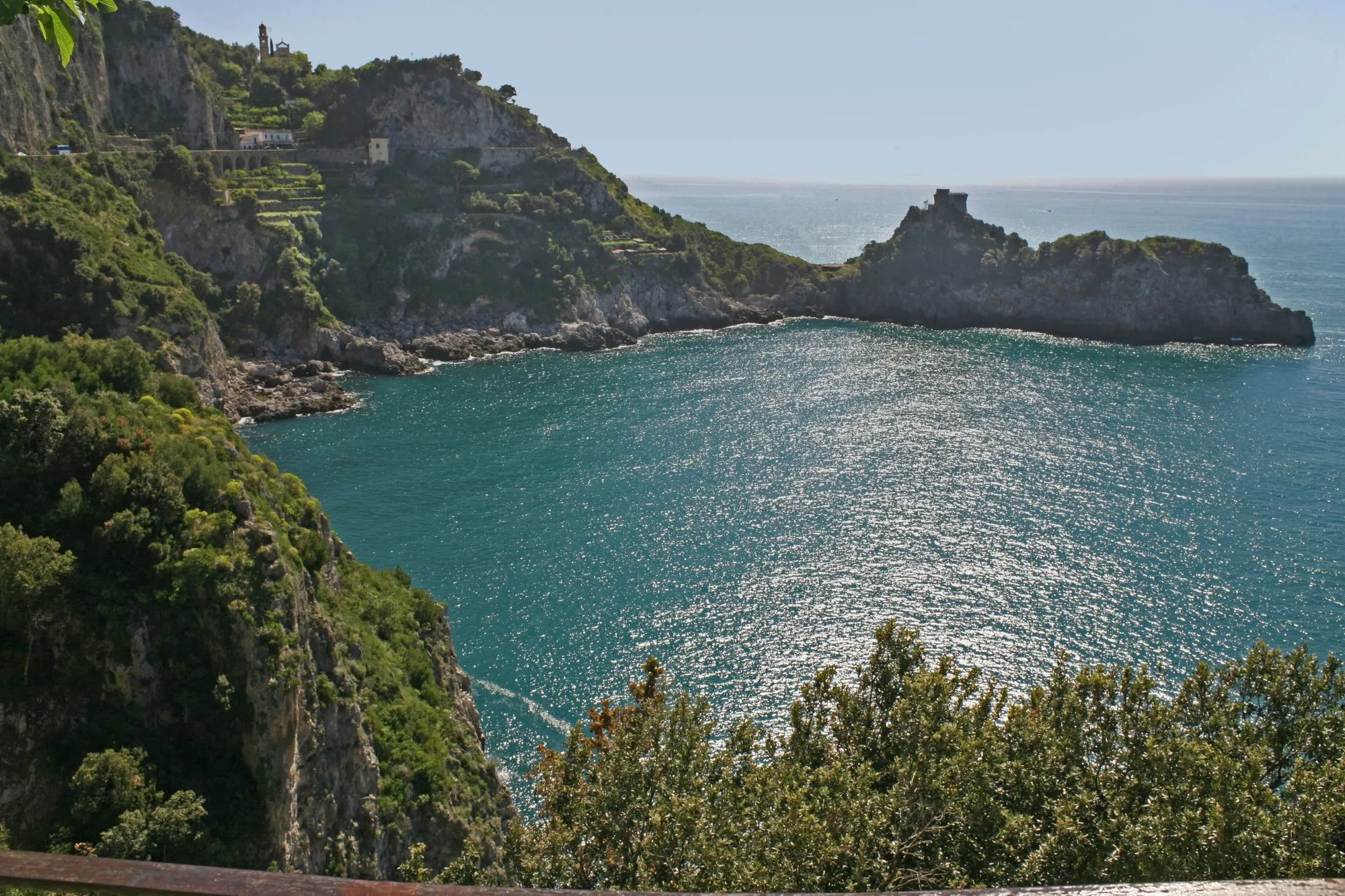
Capo di Conca: a wall that drops away cleanly, and one of the most reliable swim stops on the coast.
Bathing safety ordinance no. 37 of 15 May 2026 from the Salerno harbourmaster's office, in force from 16 May to 20 September that year, prohibits powered craft from entering within 200 metres of beaches and 100 metres of rocky shores. A new ordinance is issued every spring and the dates move by a few days, but the distances have not changed in years. Anyone swimming beyond those limits must tow a float carrying a diver's flag. The outer line is marked by 80 cm orange buoys at 300 metres.
Off the peninsula the rules of the Punta Campanella marine protected area apply: zone A (the Vervece rock, the islet of Vetara) closed to everything, zone B (Ieranto, Li Galli, Crapolla, Isca) open to transit but not to anchoring, zone C anchoring permitted only from 08:00 to 20:00 and never on Posidonia. Speed 5 knots within 300 metres of the shore. Fines run from €100 to €1,000.
Jellyfish, sea urchins and sun
Pelagia noctiluca is the commonest stinging jellyfish along this stretch and is most abundant between May and October, on hot, windless days. Swarms cannot be forecast: wind and current push them inshore and they can vanish within a day. A long-sleeved lycra top solves ninety per cent of the problem and also prevents the burnt back that a six-hour trip almost guarantees.
Sea urchins sit in crevices a metre down: wear reef shoes if you are getting in from the rocks at Marina di Praia or at Furore. Use mineral sunscreen, because the chemical kind leaves a film on the mask and in the water.
How to spend less
- Take the 2-hour tour instead of the half-day one: you save around €50 each and lose one stop.
- Go in June or late September: the same sea, fewer boats, lower rates with almost every operator.
- In a group of eight, a private boat costs less per head than a shared tour and has no imposed timetable.
- A ferry is not a tour, but Amalfi–Positano costs €10 with Travelmar under the published fare list and lets you combine a beach with a boat on the way back.
- Bring your own mask and snorkel if you are fussy: no operator gives a discount, but you avoid well-worn kit.
When to go
Mornings from May to early July are the most reliable: flat sea, good light, very little traffic at anchor. August has the warmest water of the year (26.7 °C on average) but also the busiest anchorages and the most tiresome afternoon breeze. September is the best compromise of all: 24.9 °C, a sea that is still summery, and half the boats.
Late October closes the season: many operators stop their group departures, the ferries switch to the winter timetable, and what remains is mostly rental.
Snorkelling on the Amalfi Coast rewards anyone who gets up early and picks the right boat. If you only have one morning, book a departure before 09:30 and check availability on the snorkelling tour from Positano a few days ahead: in July and August the morning departures are the first to sell out.