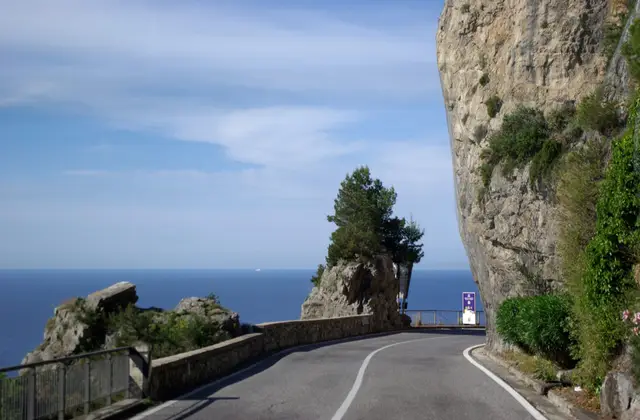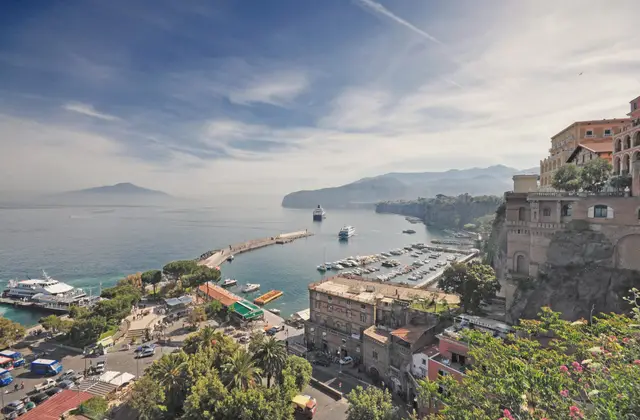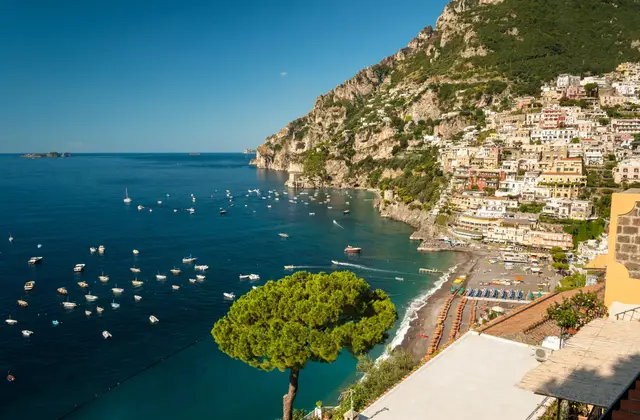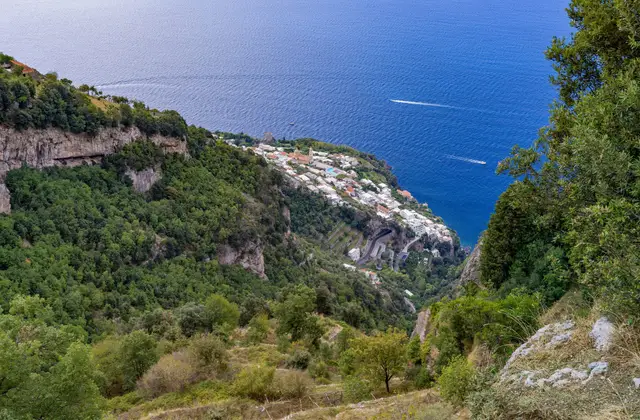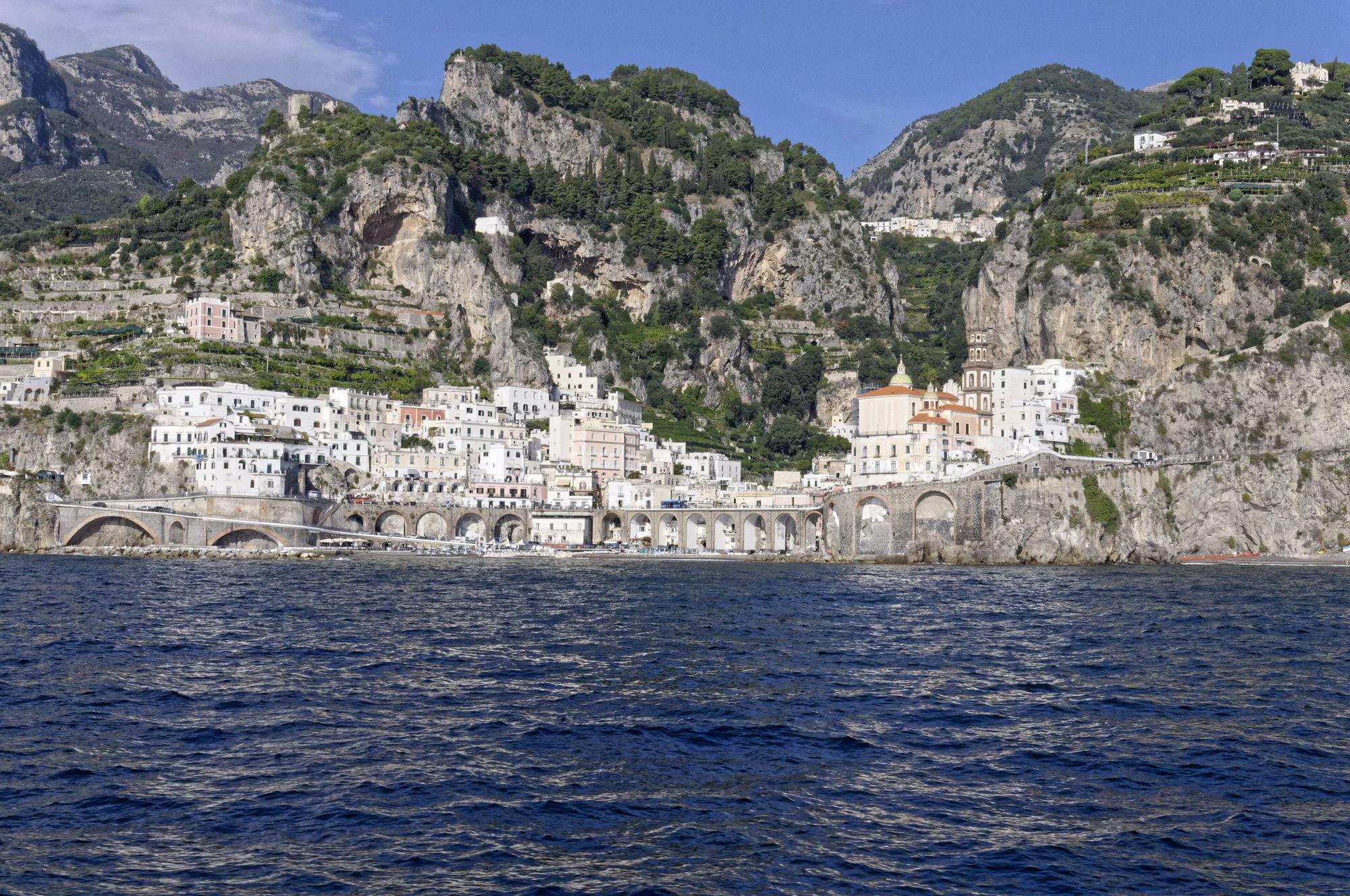
The Amalfi Coast is a roughly 40-kilometre stretch of shoreline in the province of Salerno, running from Positano in the west to Vietri sul Mare in the east, with the Lattari mountains closing it off behind. Thirteen towns, terraces planted with lemons and vines, and one road — the SS163 Amalfitana — that hangs above the water for its entire length.
Since 1997 it has been on the UNESCO World Heritage list under reference 830, as a cultural landscape of 11,231 hectares. The listing is not about a single monument: it is about the relationship between where people built and how the coast is shaped. This page explains how the coast fits together, what the towns look like from the water, when it is worth coming, and what is in the events calendar.
Geography: how the coast fits together
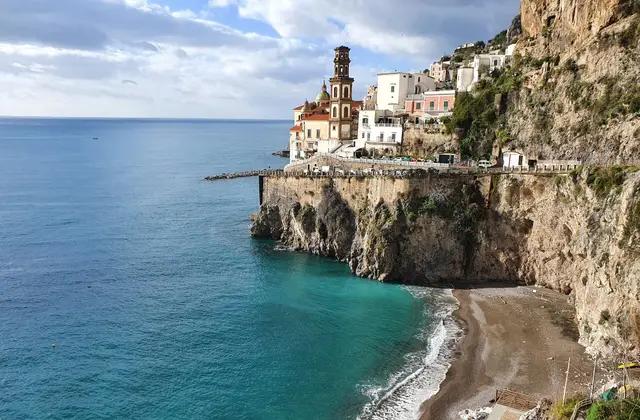
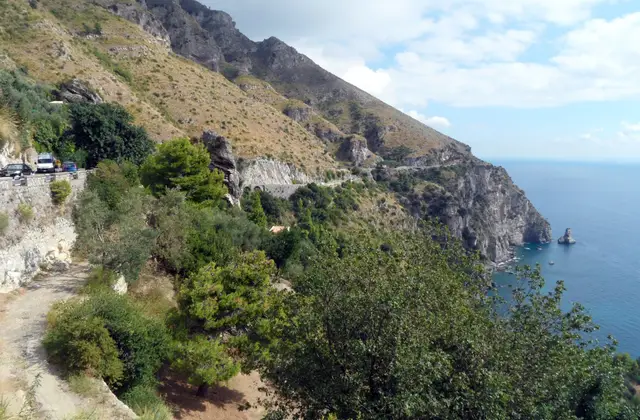
The coast occupies the southern flank of the Sorrento peninsula. The mountains drop into the sea almost everywhere, leaving room only for ravines and a few small inlets. That is why the towns are vertical, the beaches tiny, and why for most of their history these places were reached by boat rather than by road.
| Feature | Figure |
|---|---|
| Extent | about 40 km of coast along the SS163, Vietri sul Mare to Positano |
| Towns | 13 |
| UNESCO listing | 1997, reference 830, 11,231 hectares |
| Province | Salerno, region of Campania |
| Mountains behind | Monti Lattari |
| Nearby marine protected area | Punta Campanella, 1,539 ha, established between 1997 and 2000 |
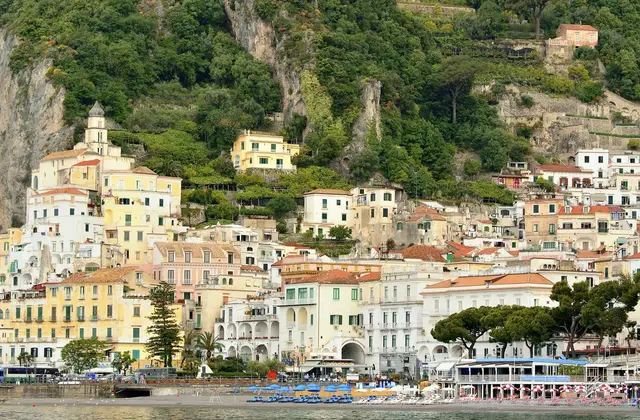
The thirteen towns are Amalfi, Atrani, Cetara, Conca dei Marini, Furore, Maiori, Minori, Positano, Praiano, Ravello, Scala, Tramonti and Vietri sul Mare. Some tourist bodies count twelve by excluding Tramonti, others fifteen by adding Agerola and neighbouring communes: the exemption list for the alternate number-plate scheme, for instance, covers the 13 towns plus Agerola. 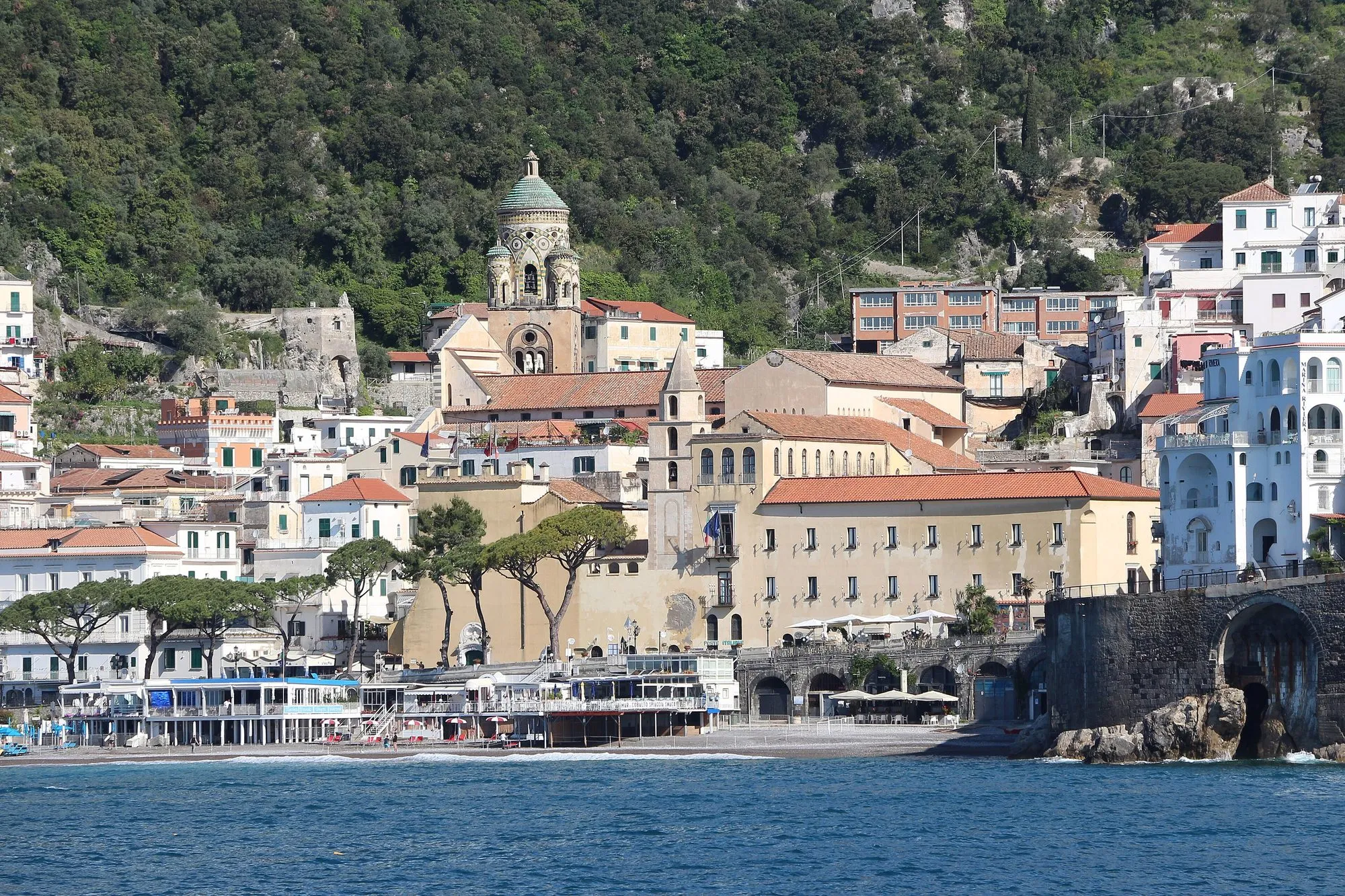 Amalfi from the water: the town opens out of a ravine, with the pier in front and the cathedral at the back.
The towns seen from the water
Sailing from west to east, the coast reads as a sequence. This is the order in which the ferries and the tour boats show it to you.
- Positano — the only town that presents itself as a pyramid, with the majolica dome of Santa Maria Assunta in the middle and Spiaggia Grande in front. The jetty is at the bottom of the steps.
- Praiano — lower and more spread out, with Marina di Praia tucked into a cleft below the Torre a Mare.
- Furore — has no centre on the sea at all. What you see is the fjord at km 23 of the SS163, with the bridge about 30 metres above the inlet.
- Conca dei Marini — the headland of Capo di Conca with its tower; shortly before it lies the Grotta dello Smeraldo (Emerald Grotto), found in 1932.
- Amalfi — the coast's real harbour: Molo Pennello for the ferries, the inner basin for tour boats, and the cathedral steps five minutes away.
- Atrani — immediately after, wedged between two spurs of rock: the smallest town on the coast.
- Minori and Maiori — the two widest beaches and the two flat seafronts, both with a Travelmar stop.
- Cetara — a working fishing harbour and the home of colatura di alici DOP, a fermented anchovy sauce.
- Vietri sul Mare — the eastern gateway, recognisable by its domes and its ceramics.
- Ravello, Scala and Tramonti — invisible from the sea. They sit high above it and are reached by bus or car.
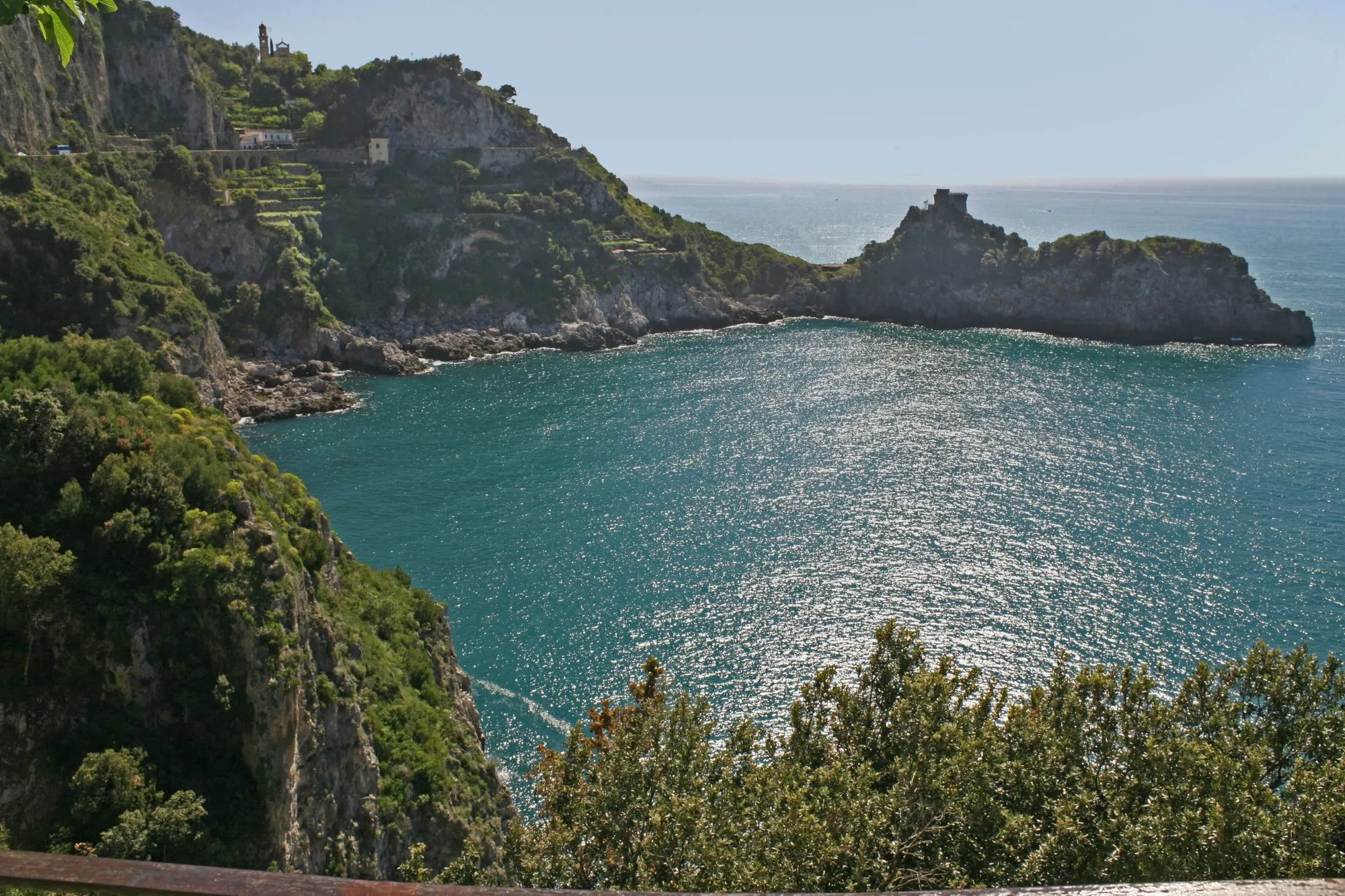 Capo di Conca: the old watchtower marks the start of the stretch with the caves.
Seasons and sea temperature
Ten-year averages for water temperature at Amalfi.
| Month | Sea | What to expect |
|---|---|---|
| January | 15.5 °C | coast almost empty, many closures |
| February | 14.5 °C | the coldest month for the water |
| March | 14.5 °C | places start reopening late in the month |
| April | 15.9 °C | ferries running from 1 April |
| May | 19.0 °C | the best window for value |
| June | 23.1 °C | long days, sunset at 20:36 on 21 June |
| July | 26.0 °C | full high season |
| August | 26.7 °C | the absolute peak of heat and crowds |
| September | 24.9 °C | the favourite month of people who know the coast |
| October | 22.2 °C | last ferry sailings around early November |
| November | 19.8 °C | reduced service |
| December | 17.3 °C | low season |
The bathing season is fixed each year by the Salerno Coastguard's ordinance and normally runs from the middle of May to the second half of September; check the ordinance in force for the exact dates. Coastal sea links and the crossings to Capri operate from 1 April to early November, with NLG usually running into the first days of November.
The events calendar
- 27 June — Sant'Andrea, Amalfi. The feast recalls the storm of 27 June 1544 that scattered Barbarossa's fleet. The manna is distributed on 26 June, the statue is carried in procession down to the shore to bless the sea, the bearers in red make their famous run up the cathedral steps, and fireworks close the night over the water. The town's hour-by-hour programme had not been published when we checked.
- July to early September — Ravello Festival. The 74th edition, in 2026, ran from 4 July to 5 September: 22 concerts at the Villa Rufolo Belvedere and other venues in the town, tickets €20 to €60 (jazz €40, under-26s €20 at the door), and a sunrise concert on 11 August at 05:15 that sold out. The dates move every year, so check the official site.
- 15 August — the Assumption, Positano. Solemn mass at 19:30, the eighteenth-century statue carried down to the shore to a chorus of boat horns, then fireworks over the bay after dark, with a crowd of boats anchored offshore.
- Early June — Regatta of the Ancient Maritime Republics. Amalfi, Genoa, Pisa and Venice take turns to host it: Amalfi’s turn came in 2025 and the 71st edition was rowed in Pisa on 2 June the year after, so check whose turn it is before building a trip around it.
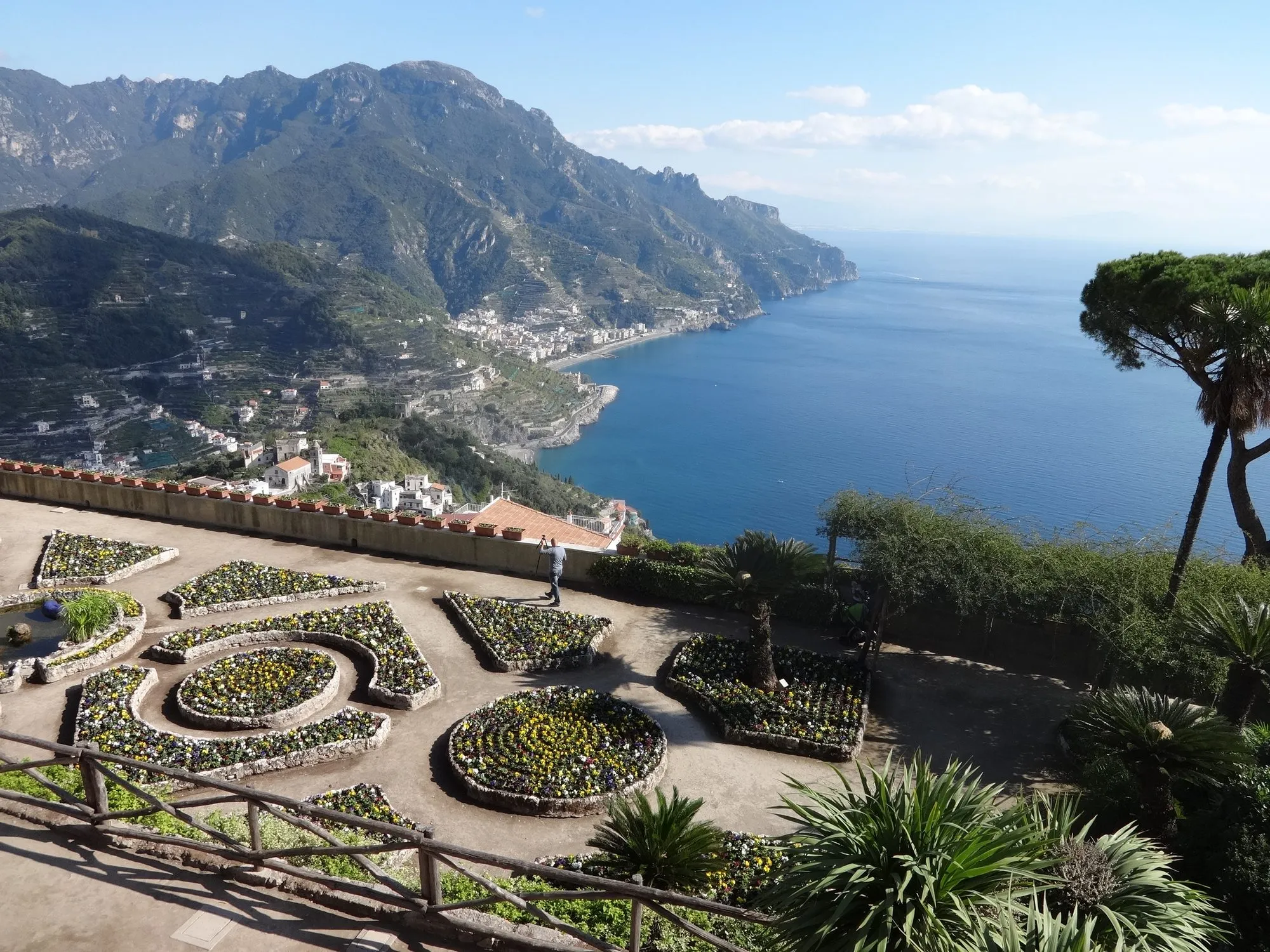 The Villa Rufolo Belvedere, the main venue of the Ravello Festival: garden entry is €8.
What it costs to be here
The tourist tax (imposta di soggiorno) is set by each town and paid per person per night. It is almost never included in the price you booked online.
| Town | Rate | Notes |
|---|---|---|
| Positano | €2.50 (B&Bs, holiday lets, hostels, campsites, 1–2 star) up to €5.00 (5 star) | 1 April to 31 October, under-tens exempt |
| Amalfi | €1.50 (hostels), €3.00 (B&Bs, holiday lets, campsites, 3 star), €4.00 (4 star), €5.00 (5 star) | full rate for 4 nights, then 50% from the fifth |
| Minori | €2.00 (B&Bs), €3.00 (1–3 star), €4.00 (4–5 star) |
On top of that come the running costs: lunch in a trattoria €20–30, dinner €30–75 per person depending on the town, a sunbed and parasol €15–40 in Positano. The full picture, with itineraries, is in the guide to planning your trip.
Getting here and getting around
There are four ways in: Naples with the Circumvesuviana train to Sorrento, Salerno by high-speed train and then ferry, Capodichino airport with the Curreri bus to Sorrento, and by ship if you are arriving on a cruise. The full fare table is in the guide on getting there, while anyone stepping off a ship will find the timings that matter on the page for cruise passengers.
Once you are here, the ferry is the right tool: Salerno–Amalfi €12, Amalfi–Positano €10, Amalfi–Minori or Maiori €5 under Travelmar's published fares. On the road, the targhe alterne (alternate number plates) apply from 10:00 to 18:00 on the Vietri–Positano stretch, every day through the peak weeks of August and September; ANAS reissues the ordinance each year, so check the dates in force.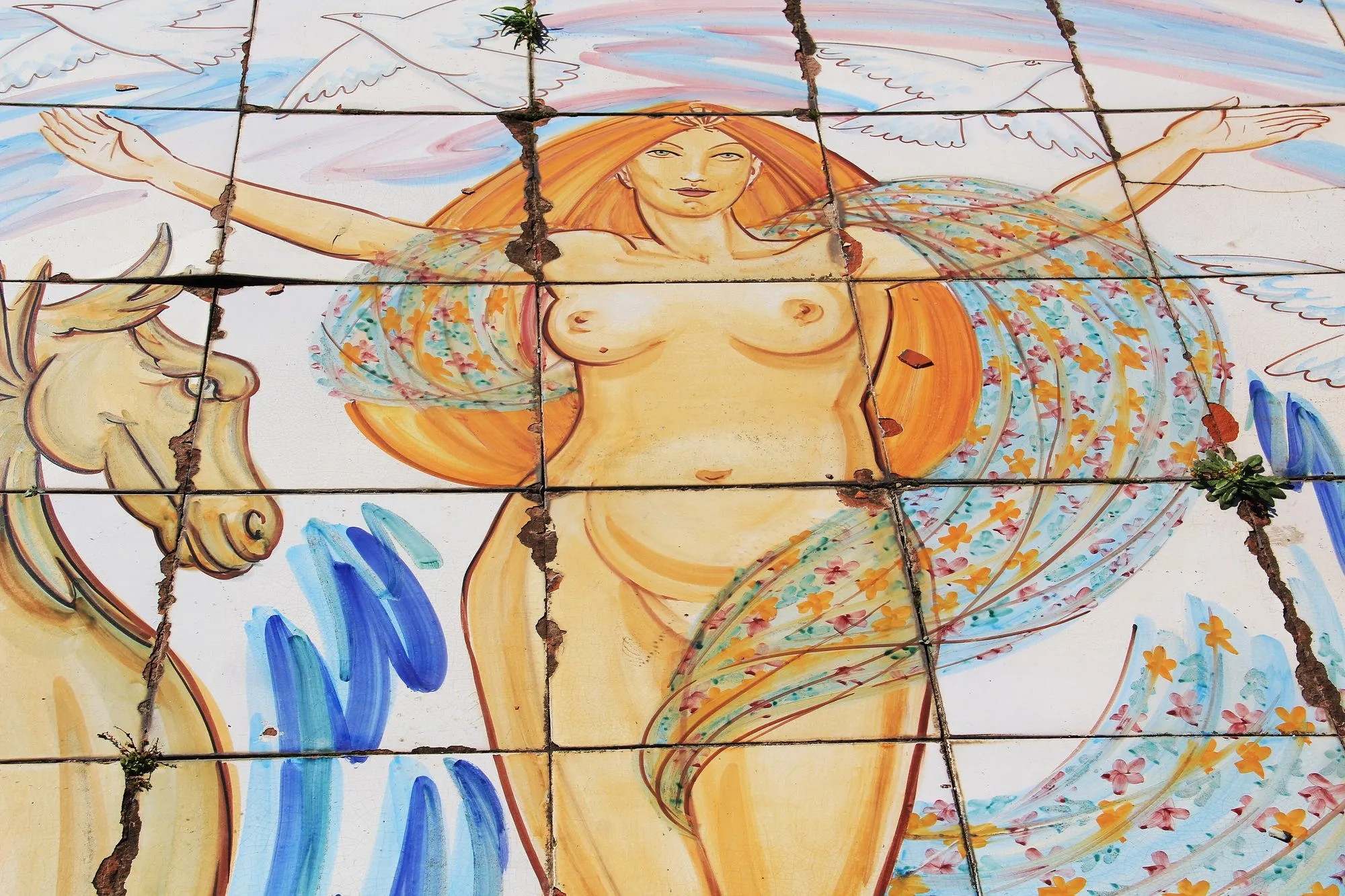 Vietri sul Mare: the eastern gateway to the coast and the capital of Campanian ceramics.
What to see first
If you have to choose, this is the sensible order:
- A day on a boat. It is the way this coast was built to be seen. The shared tour from Amalfi with caves and drinks costs €86 per person: you can check availability or compare it with the snorkelling trip from Positano at €95 (prices on GetYourGuide).
- Amalfi on foot. The cathedral, the Cloister of Paradise, the Paper Museum, and Atrani five minutes away.
- Ravello. Villa Rufolo (€8) and Villa Cimbrone (€7), for the view from above that you never get from the water.
- The caves. The Grotta dello Smeraldo at Conca dei Marini (€7) and, if you are going to Capri, the Blue Grotto: the differences are set out on the page about the two grottoes.
- The Fiordo di Furore. The cut in the rock at km 23: details on the Furore fjord page.
The full ordered list is in things to do on the coast; the food and the wineries in food and wine; the walks in hiking trails. If you are based in Sorrento the jetty logistics are on the from Sorrento page, and if you are staying in Positano, on the from Positano one.
The Amalfi Coast is not a checklist of towns. It is a vertical farming landscape that only makes sense from the water and changes completely with the seasons, with September the most balanced month and June the one with the longest light. Fix the boat day first, then build the rest of the trip around it by comparing the formats in the guide to Amalfi Coast tours or straight through the experiences available on the Amalfi Coast.